






You can also listen on the ADA Member App and enjoy bonus content.
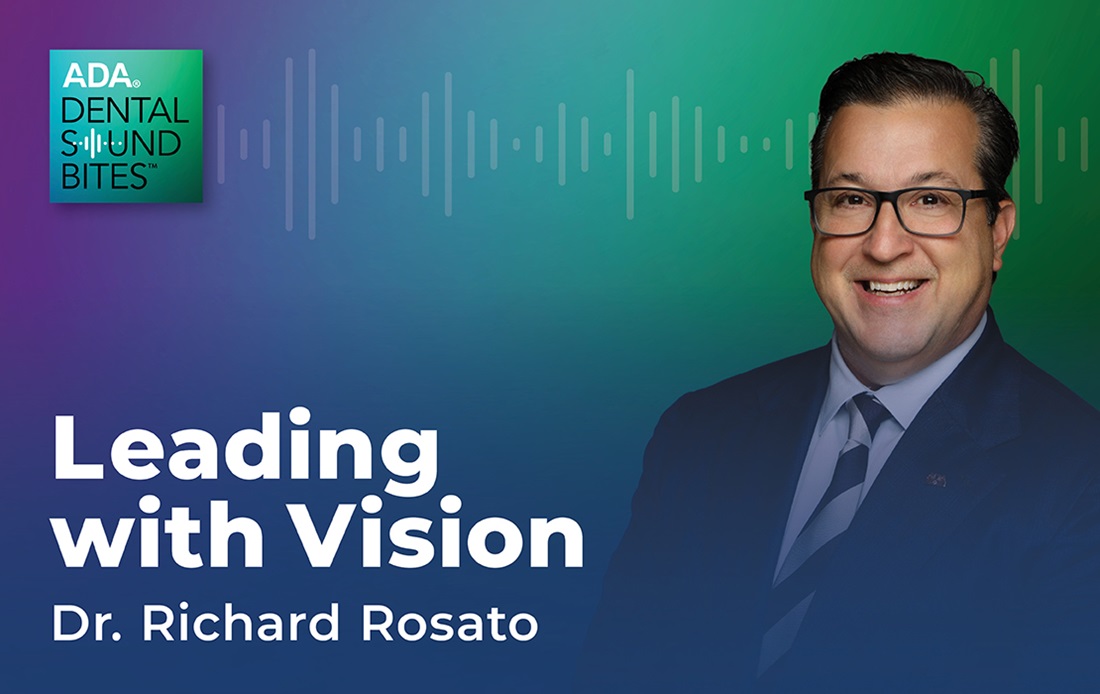
A conversation on leadership and what the future of our profession could look like.
Leading with Vision
Description: A conversation on leadership and what the future of our profession could look like. We’re talking with ADA President Dr. Richard Rosato.
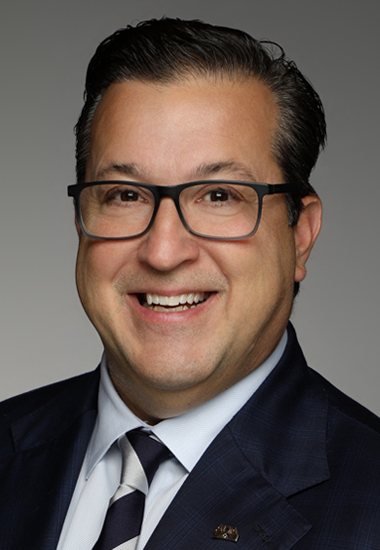
Special Guest: Dr. Richard Rosato
“Have a growth mindset. Go at everything with a tentative yes, instead of a tentative no. Have a tentative yes and let's be together. Join me in the energy to be together to fight for our patients.” — Dr. Richard Rosato
Dr. Rosato
Show Notes
Resources
[00:00:00] Wright: What's it like leading one of the most influential dental organizations in the world? And where is our dental profession headed? I'm Dr. ArNelle Wright, and today we are asking those questions and talking about leadership with the president of the ADA Dr. Rich Rosato. Let's get started.
[00:00:20] Announcer: From the American Dental Association. This is Dental Sound Bites. Created for dentists by dentists. Ready. Let's dive right into real talk on dentistry's daily wins and sticky situations.
[00:00:36] Wright: Hello, hello friends. Welcome back to season seven of Dental Sound Bites and Happy New Year. What an amazing time for us to be kicking off another season of our amazing podcast. I can't believe that it's already been like six seasons of this podcast. We are growing so much. Thanks to all of you listening and I hope y'all had a really nice break, but I wanna share a little bit of all the things that I've been up to since we wrapped for season six.
You all know I've been busy. I started a practice, well, I acquired a practice, but we went through this entire branding change, name change, all of the things with becoming a practice owner. And then at the same time we have a little bun in the oven. We found that out. That was really wonderful news. So, at the time that we're recording this, we are going to be becoming parents to our third baby boy, which is really, really exciting. I feel like it's just the biggest blessing and biggest piece of news that we could have had as a family and I know you all have been watching and waiting for all of the things related to Dental Sound Bites to come out.
Dr. Effie and I are still your girlies. She couldn't make it to today's episode. However, she's gonna be joining in and jumping in on the conversations very, very soon. So we wanna give some love to Dr. Effie and just, you know, have you guys be ready for a lot of conversation this season.
So today we are super excited to kick off this season with a very special guest, our ADA President, Dr. Rich Rosato. Welcome back to the show, Dr. Rosato.
[00:02:20] Rosato: Hey, Dr. Wright. It's good to be with you, exciting times for our profession, and it's good to see you again.
[00:02:27] Wright: I know. I feel like we are just like running into each other a lot lately, and I'm super excited because, you know, I know everybody wants to hear from you. I sure do, so we have a lot to catch up on.
[00:02:38] Rosato: Let's go.
[00:02:39] Wright: Let's do it. So why don't you go ahead and tell our listeners a little bit about yourself and some of the things that you have been working on lately.
[00:02:47] Rosato: Yeah. So I'm Rich Rosato. I'm a practicing oral maxillofacial surgeon in New Hampshire. We're a dental family. my wife's a general dentist, three children, our dog Roma. And it's been really exciting from day one I've been on the road traveling, representing the profession, figuring out, you know, how to bring us together. That's the biggest thing on my mind with everything going on, you know.
Government shut down, how is it affecting the dental profession, our ability to provide care? That's been my focus since I became president.
[00:03:22] Wright: Woo-hoo.
[00:03:23] Rosato: Yeah.
[00:03:24] Wright: We are recording this episode just after the ADA's annual meeting, and you've recently transitioned from the president-elect role to president, as you said. Can you tell us just a little bit, give us a sneak peek of how that's been? What was your first order of business? You know, it's been two weeks. Talk to us about, you know, what's been going on.
[00:03:44] Rosato: Yeah, it's, it's definitely a transition. You end up spending, you spend a year under the president who you know, Dr. Kessler was amazing and so I miss 'em. It's kind of weird not to have them right by your side, but stuff I've been working on right out of the gate, we did a few things. We did a statement on clinical autonomy to sanctify the relationship between the patient and the doctor and that came out. I was able to announce it at SmileCon and there's a white paper you can go to.
So, those are some of the big things we're working on and just yes, being visionary while we're respectful of the finances of the ADA and everybody's dues dollars so, yes.
[00:04:24] Wright: Yes. Okay, well we're going to double click and go a little bit deeper into your vision. While we're talking about, you know, all of the things that you've been working on straight out the gate, can you tell us what your vision is for your presidential year and your hopes for the future of the profession? I know you kind of touched on it a little bit, but I would love for you to just kind of take us a little bit deeper.
[00:04:45] Rosato: Yeah. I think the best thing to do is talk about my presidential pillars. Two are aspirational and three are actionable.
So the aspirational ones are to be united and purpose around our mission. I love the friction of our mission and as weird as that sounds, I love that we have to balance between success of the dentist and optimal care for the patients we serve, right? The public health of the United States of America.
Along with that, to foster a culture of listening so that, you know, people really feel their voice is heard. We've heard that over the years, that people feel my voice doesn't really matter. Why should I be a member? And I want everybody's voice to matter and then the actionable ones, I talked about clinical autonomy, I talked about wellness, and then the big one is look at the future.
Let's shape our future. We're facing things like workforce payment, and I know you and I have had a chance to talk about oral health 2050 and that's the big vision. That's the thing moving forward.
[00:05:45] Wright: Nice. Now, do you come up with these things like over time? Are you working on these things during your president-elect? I would love to learn a little bit more about how you determine the vision. Is it just things that you're really passionate about that are also, in alignment with the ADA's overall mission?
[00:06:05] Rosato: Yeah, I think constant learning, just being, having a growth mindset. So over the years of being on the board or going back.
To ethics, I would say clinical autonomy came out of my time on ethics.
[00:06:16] Wright: Oh, I love that.
[00:06:17] Rosato: Yeah. Where I served on the Council on Ethics, Bylaws, and Judicial Affairs.
[00:06:20] Wright: Yes. CEBJA.
[00:06:22] Rosato: Yeah, CEBJA. So as you go through your leadership, like we all do. Different things come up that make you say, you know, what's my philosophy on leadership and where are we gonna go with that?
So my philosophy on just being a good leader is if you see something absurd and we all do, whether you're practicing every day like you are, and you just say, this doesn't make sense. Don't accept it. Be relentlessly creative. Say, how can I find a way through this, around it, over it, not just for myself, but for the profession and make the impossible possible.
And so I am probably to the. Maybe the detriment of my, my wife might say, see, he's crazy. No, it's just, it's just constant thinking that, um, what can we do better? And if it seems absurd, find a way to get it done for, for our patients and for us.
[00:07:17] Wright: I love it. So let, let's talk a little bit about the future.
So you talked about a future focused vision. You mentioned oral health 2050, and I kind of want to go there because we all know that dentistry is evolving very fast as it relates, you know, to workforce dynamics, emerging technologies like ai that it, it's not, it's no longer coming down the pipe. AI is definitely here.
Uh, you talked about a little bit of that friction about the patients optimal care, patient expectations. Can you tell us what do you see as some of the biggest challenges and opportunities that are facing the profession right now, and how might your future focus, vision help us prepare for what's next?
[00:07:59] Rosato: Yeah, thank you. So oral health 2050, when I thought of, I call them panels, that PE that people will be involved in. When I think of the five panels, those address. Exactly what you're talking about. Okay. So the first one is, what will payment look like for dental care over the next 25 years? Will it be the same 1200 to $1,500 benefit that only 6% of patients ever utilize?
Is that the future? It's been like that since, I don't know, since I went to residency. Um, so, you know, at least the last 25 years, I feel that our patients have been left behind when it comes to that. So we need to decide what does the future payment model for dentistry look like? Begin to put advocacy steps in place and move those things forward.
Be proactive. The next thing is 49% of patients in our country receive care. My question to you and to everybody listening, is that a successful healthcare system? And if it's not, what should the delivery look like of dental care over the next 25 years? If we were ever able to drive it up to 60 or 70%, that would add millions of people into receiving dental care?
Awesome. Right?
[00:09:15] Wright: Right. Yeah. Yeah.
[00:09:16] Rosato: But how will we provide it? The next thing is we need to look at dental school and the cost and quality of education we have to it. It's, um, as much as we are preaching, being inclusive, and one thing I'll go back to is my history as a first generation American, first person in my family to go to college.
I borrowed everything to go to school.
[00:09:39] Wright: Same. So, yeah.
[00:09:40] Rosato: So when you think of that. And we preach about, we wanna be inclusive, we want the dental profession to be open to everybody. The cost of education and some of the things that are happening in Washington are, are right under our noses, is making it more elite.
And then, and then I'm hearing from students all the time about the quality and that we want to standardize the quality so that when a student comes out. They can choose any practice model they want, any practice environment they want, and it's not based on a financial burden or an experienced deficiency that they might, they feel they might have.
Wellness. I want to add to the wellness that we've been working on with our providers and bring that to a patient. Also focused wellness. And then last, what you brought up is AI and technology. How do we embrace AI and technology over the next 25 years to make. Dental care, more efficient, more effective in all the phases of a patient's engagement with a dental office.
Mm-hmm. So I hope you feel my excitement. Heck, you, if we begin, heck, I, I can't do all that in one year. Nobody can. Exciting here.
Yeah. I can't do all that in one year. But we can put steps in place that will live on, we're, we're all dental dentists are getting information saying, you know. What could it be like, imagine what it could be, not what it has to be or what someone else tells us it should be, but what do we feel with an open canvas?
What would we like to paint the dental profession as to our patients over the next 25 years?
[00:11:17] Wright: Lovely. Okay. Wait, before we transition, like I have so many questions. Yeah. That if, if I can just double click on a few of those five panels. Um, you briefly mentioned a little bit about things that are happening, you know.
Washington. So that's from an advocacy perspective. Um, and then I, I also want you to talk a little bit about what we can do and how we can think about, um, the fact that this isn't something that happens overnight. You, you mentioned that you, you want these pillars or the panels to live on and it's gonna take some time to develop.
Like, what are your thoughts about, or your, your, just your response to the fact that it's gonna take some time to happen, or what can we expect as far as. You know, this, the, the five panels go.
[00:12:02] Rosato: Yeah. So we are now, it, things are taking life. So we have, we have a consulting group that's working with us. Where we were able to take away the cost burden of doing a project this big. They'll put, they'll do all of the publishing and so forth. So we've solidified that and yeah, so it's moving forward. And when I asked them like. Like, could we have the first pamphlet? I don't want this to be a book that goes on the A shelf.
Like some people listening might remember Future of Dentistry Back in 2001, 2002, 200-page book that goes on a shelf. That, I want this to be a continuous every year, two to three pamphlets that come out that everybody's saying, I can't wait to read that five page pamphlet to see what, where are we going?
Where have we gone? Where could we go? And then, um, so I love that it's not, not going to be just one year a live on thing. I that's like the most important aspect because it helps me when I travel the country, talk about how important it is to be together. Whether you're a specialty organization, a heritage organization, um, you work in any sphere, that's going to be a part of, of providing dental care in the future.
And yeah, we have to talk about those spheres. Some of that is insurance.
[00:13:19] Wright: Yeah.
[00:13:19] Rosato: A lot of it is the people who provide the equipment that we provide the care with, if they're going to be a part of providing that care for the next 25 years. They also need to be on the panels and help shape the future and tell us what they see coming and how we can embrace that or shape it.
So I, I'm excited.
[00:13:36] Wright: I feel your excitement. Yeah, I'm excited too. What can members do, uh, as it relates to helping Oral Health 2050 come alive and remain alive?
[00:13:48] Rosato: Yeah. Oral Health 2050 came out of the thought that. Um, you know? Two big things: one was the workforce shortage.
[00:13:55] Wright: Okay?
[00:13:55] Rosato: So that was the big thing. The other thing I see happening. I thought, you know, we can go down that road a little bit where I mentioned what's going on in Washington.
[00:14:03] Wright: Yeah, yeah, yeah.
[00:14:04] Rosato: And everybody who is listening to this, who has 20, 30, 40 years left of their career, they really need to think about the separation that's occurred. People saying, why do I, why do I want to be a member?
[00:14:15] Wright: Okay.
[00:14:16] Rosato: And it's your voice that's most important. There are certain states that have different philosophies than others, so they help shape the theme and what we put forward as a dental profession. I think that's important for them to hear. It's their voice that's most important and so those are the two big things that excite me going forward, long past my year.
[00:14:39] Wright: I love that. So I've heard the theme of togetherness a lot throughout our conversation tonight and as you think back on some of those questions that you're being asked by members, what about the, well, they're members technically, so students that are currently going through school who have not yet made the active decision to be an ADA, like a dues paying member, what can you say to them about like, this climate that we're in, because they probably have question marks and things like that, or even early career that's like one year out that they're like I'm just here trying to, you know, start my career.
[00:15:20] Rosato: Yeah.
[00:15:20] Wright: You know, what are your thoughts?
[00:15:21] Rosato: One is that will be there, that the ADA is going to be beside you. The goal is for them to feel that. Whenever they're in the operatory, they can focus on their patient, they can focus on their communities while we focus on having their back and I know we say that, and I've been saying this thing “ADA for life”, I want to be able to help them in every aspect.
But I also, when I go around and I talk to students. Right in that moment, I say something, my dad, it is real interesting. He didn't have much of an education, but he talked about perspective and that perspective changes everything and he was a bricklayer, so he used to use a bricklayer's perspective, but you know, when I spoke at the House of Delegates just a couple of weeks ago, I, you can switch it to anything. So I switched it to dentistry and I said, you might ask the first dentist, what do you do? And they say, I fixed teeth. And okay, you know? Right? They do. The second dentist, you ask that too, like, hey, what do you do for a living? They say, you know, I am creating confidence. I'm creating smiles. I'm making people feel really good about themselves and then you ask the third dentist, and the third dentist says, I'm changing lives. And they're all doing the same work every day. So I try to let the students know that it's about perspective.
And especially when it comes to their personal health, because we're seeing a real loneliness as isolationism among our students. And I wanna, I want them to know that sometimes you feel alone in that moment, overly burdened, but to lift each other up as you go through the stress of dental school or opening your practice or just starting out paying your loans, that you need to be there for each other and, uh, you know, a lift while you climb type of attitude.
[00:17:10] Wright: Absolutely.
[00:17:11] Rosato: Yeah.
[00:17:12] Wright: We'll be right back.
[00:17:14] Announcer Ad 1: Did you know that ADA members are making a big impact on dentistry? Together we are fighting for community water fluoridation, advocating to improve access to care, pushing for dental insurance reform, working to ease the student debt burden and driving workforce improvements. But we can't do it without you. Our unified voice is critical in driving real change. Help us advance the future of dentistry by renewing your. Membership for 2026 at ADA.org/renew or by becoming a member at ADA.org/join.
Announcer Ad 2: Your ADA membership opens doors to everything you need to thrive in dentistry. From exclusive savings and career resources to cutting edge clinical tools and advocacy that shapes the future of the profession. ADA is here for every stage of your journey. Explore wellness programs, continuing education and solutions that simplify your practice, all designed to help you succeed. Discover your benefits today at ADA.org/memberbenefits.
[00:18:30] Wright: Welcome back to Dental Sound Bites. Today we're talking about leadership and the future of our dental profession with Dr. Rich Rosato. Well, I think this is a good segue into leadership. Uh, can you tell us what personal leadership philosophy guides your decision?
So we learned a little bit about the brick layer. I love those lessons from your dad, but what personal leadership philosophy helps guide your decisions?
[00:18:56] Rosato: Yeah, so the number one is always to have that perspective. To think about him. Are we having the right perspective in this moment and not getting overly negative or worked up about something?
And then I have this saying that I always say, people who know me are going to laugh. I always say, always remember, and I, and I'll sometimes ask, do you know who the smartest person in the room is? And then I paused and they kind of, I said, look around, you know, try to figure out who's the smartest person in our boardroom.
And it's always, always the room. So whether it's the House of Delegates or it's a boardroom or it's your office, you just let people go through their leadership styles, the process they need to go through, and they almost. Always get it right. And if they don't get it right, generally what you find is they come back and say, let's revisit that, and then they get it right.
So I sometimes sit back when there's intense debate or it seems to be going sideways, or I see frustration in people and I just be. I just tell myself, be patient, have the right perspective, and just let the room get it right and all of the thoughts will come through.
[00:20:07] Wright: I love that. Oh my gosh. Okay. So, so many gems and pearls.
So you spoke a little bit about, you know, if there's any friction or if a conversation decides, you know, oh, not decides, but happens to start going sideways.
[00:20:21] Rosato: Yeah.
[00:20:22] Wright: Every leader along their journey, they face challenges and they have defining moments.
[00:20:27] Rosato: Yeah.
[00:20:27] Wright: So keeping some of this friction and you know, just hard conversations.
Hard conversations. Excuse me in mind, can you tell us about one of your most challenging leadership experiences and how you navigated it?
[00:20:43] Rosato: Yeah, I would say the most challenging thing is right what we're living right now. We have financial guardrails at the ADA. and let's dive into those a little bit, if can.
Let's dive into what's going on at the ADA. You know, we've had membership dropping for about a decade and a half. So the stress that that puts on a system, if you can imagine, is that, you can't just keep raising dues. You can't just go astronomically high. So you try to balance that with non-dues revenue. Non-dues revenue adds risk. Some people, some things work out and you're like, wonderful. Some things take a long time to work out. It's a long game and sometimes, sometimes things don't work out and you face scrutiny and rightfully so because you're taking members' dues and you're trying to create non-dues revenue to balance and stabilize the dues as membership drops.
So at the same time we have that, this is back to your question, what's the biggest challenge I'm facing? Is, how do you create financial stability, respect for every member and what they have to do to pay their dues and at the same time still be visionary, still put forward the programs, not just do cuts because we've done some cuts this year that are painful to me that hurt, that those are so important to so many people. How do you bring those back? How do you maintain vision?
[00:22:13] Wright: I was gonna ask if you could do that, but. Thank you.
[00:22:16] Rosato: That's on my radar, you know? If we can do it, because I want every dentist and every model to feel supported and when you have to make cuts, it's an opportunity for the ADA to say, what do we do best?
What does national offer that a state can't? And then support states. But at the same time, when you do those cuts, it's painful and I see the pain on some of our members' faces when I meet them and I have. So those are the things that's the biggest challenge, trying to bring things back where appropriate, try to maintain visionary programs that cost money and still be a good financial steward for our members.
[00:22:57] Wright: Yeah. So I hear you're navigating it also by keeping the future in mind. So you're looking at the future while also staying present and focusing on the now. It's that, that has to be a little bit of friction for you and as well, right?
[00:23:15] Rosato: Yeah.
[00:23:15] Wright: Yeah.
[00:23:16] Rosato: And that's the perspective. That's where the perspective comes in.
Do you get upset or do you, maybe some people will think, oh, I'm just convincing myself of it, but over the years, I've learned to embrace it, to enjoy it, to say, wow, this challenges me to be relentless, to be creative, to try to find a way for our members. And I love that and it's helped me in all aspects of my life.
[00:23:39] Wright: Yeah. And so speaking of another aspect of your life, how are you staying recharged and grounded with all of this? You know, it's like a tumultuous time for you as a clinician, as a leader. You're the ADA’s president, so you, I'm sure you're shouldering a lot of weight. So how are you saying recharged and grounded
[00:24:00] Rosato: In the moment?
In a hotel room like I am now, I do a lot of mindfulness.
[00:24:07] Wright: Okay.
[00:24:08] Rosato: First thing in the morning, every day. I embrace that when I was going through the campaign so I could stay level, when the pressure hit or things went sideways and then lots of exercise, you know. I went to the gym late last night after dinner just to kind of get in some cardio and before bed. The stuff that really energizes me is when I can go home and be with family and my dog, my wife, incredible and I still practice so, that was a gift that I didn't know I'd receive. When I get, when I get to go into the office, Dr. Wright and just see patients, it's like it reminds you of that calling of why you chose this profession and it's heaven.
[00:24:54] Wright: I bet, so I didn't even know that you could still practice as the ADA's president. I mean, I bet it's good because it almost makes you have a hard stop and a hard break from things, and then you get to compartmentalize a little bit. Is, am I right about that?
[00:25:10] Rosato: I would say the second part, yes.
Okay. The first part I would say, you know, I'm maybe hard stop. Maybe, maybe, maybe three to four days a month. Most of our viewers would say, come on, that's not really practicing, but it, but I would say the biggest thing it does besides compartmentalize, which is really healthy and helps with wellness, is that it keeps me in touch with what everybody's facing, to be able to go in and not be told by a member. Like you calling me saying, hey Rich, this is happening on the insurance side, let's say, or this is happening on the cost of goods. I'm, I can see it firsthand and say we need to address it. So that's also a gift.
[00:25:54] Wright: Wonderful. So I have a couple of more questions. Outside of all of your travel are members and are you being contacted by members with questions? And that also helps you, you know, with visionary, with planning, goal setting, you know, being future focused. Do you get some of those ideas and you get to say, hey, you know what, that's actually a good idea or something that I should ponder?
Do you get to do that as well or?
[00:26:21] Rosato: Absolutely. You spend, you spend a good amount of time of this job just answering to members, which is great. They might reach out for a call and, you know, I'll say, hey, you know, shoot me a text and I'll get back to you in a day or two and I enjoy that. You know, and so that's what you do here.
A lot of what's going on and where people's pain points are and also where the positives are, right. Sometimes they, you know, at times they call with solutions and you're like, hey. So a recent one was a member called me about special needs care and said, I'm not, you know, and we're all seeing this, a lot of dental schools are putting in special needs clinics, whether it be for autistic children, right? So when you, when you get to travel and some, one of the things I do is go to different dental schools. So you'll see a specialty care clinic and this was a great question. She called me and she said, “do we have a standard of what should be provided in those clinics? Do we have a guideline? So each child that's going into those clinics is receiving a standard of care” And I said, this is a great question. Let's look, let's look into it. So those are the things that drive the vision, drive the solutions. Great perspective. You had a great..
[00:27:36] Wright: Yeah, that goes right back to oral health 2050, those five panels that you talked about.
That's wonderful.
[00:27:41] Rosato: Yeah.
[00:27:43] Announcer: On the next dental soundbites,
[00:27:45] Ioannidou: A look at the top challenges and trends for dentists in 2026. Dr. Marko Vujicic, Chief Economist and Vice President of the ADA Health Policy Institute serves the industry predictions to help you prepare for the year ahead.
[00:28:04] Wright: Oh, well this has been such a great conversation. Thank you for joining us today.
[00:28:10] Rosato: Yeah, so great to see you again. I wish you the best in what's coming up for you in your life.
[00:28:15] Wright: Yeah, I know.
[00:28:16] Rosato: I love it.
[00:28:17] Wright: I know we have a little baby on the way.
[00:28:18] Rosato: Oh yeah. So, gosh. So exciting.
[00:28:21] Wright: I'm super, super pumped. Well, before I let you go, is there anything else that you'd like to add that we haven't asked or we haven't covered today? What can we cover? Any last minute, final words of encouragement or any topics that you want to discuss?
[00:28:37] Rosato: Yeah, I would say that I, just the perspective thing. Everybody listening, have a growth mindset go at everything with a tentative yes instead of a tentative no. As dentists, we tend to be really, you know, down to the detail like we should be. So just have a tentative yes and let's be together. Join me in the energy to be together to fight for our patients. Thank you. It's great spending time with you.
[00:29:04] Wright: Same. Well, I want to remind all of our listeners that we will have all of the resources and information that were mentioned in this episode.
They will be linked to the show notes on ADA.org/podcast and welcome, welcome to all of our new listeners. If this is your first time, just make sure you are tuning in wherever you're getting your podcast. Make sure you hit that subscribe button and remember, you can watch our episodes now on the ADA's YouTube channel.
So thanks again for joining us, Dr. Rosato. We are so happy that we were able to hear from you this season.
[00:29:43] Rosato: Absolutely. I have to harness your energy every day. Every day. I love it.
[00:29:48] Wright: Woohoo.
[00:29:48] Rosato: Good. Good.
[00:29:49] Wright: Thank you.
[00:29:50] Rosato: Bye now everybody.
[00:29:52] Announcer: Thank you for joining us. Dental Sound Bites is an American Dental Association podcast.
You can also find this show resources and more on the ADA member app and online at ADA.org/podcast.
The views and opinions expressed in this program are those of the speakers and do not necessarily reflect the views or positions of the American Dental Association.