






You can also listen on the ADA Member App and enjoy bonus content.
A look at the updated radiography recommendations to enhance safety in dentistry.
New Radiography Recommendations
Description: A clinical conversation about the updated recommendations to enhance radiography safety in dentistry.
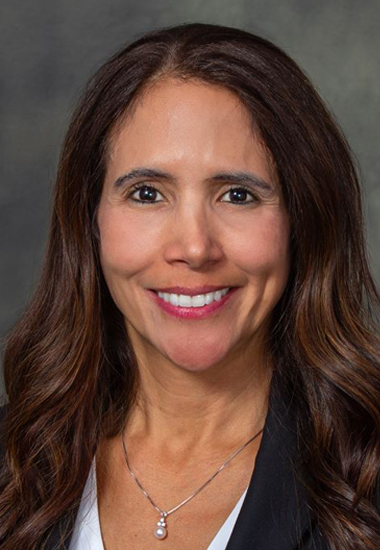
Special Guest: Dr. Erika Benavides
“The biggest takeaway is to avoid routine or convenience imaging and focus on patient-centered imaging. And , when available, we should try to obtain previous radiographs. And the decision to obtain radiographs should always be based on the patient's specific needs.” — Dr. Erika Benavides
Dr. Benavides
Show Notes
Resources
[00:00:00] Announcer Ad: Nano-hydroxyapatite isn’t a commodity—a biomimetic crystal whose properties vary by sourcing, manufacturing standards, and cost. Crystal morphology, particle size distribution, and purity, directly determine clinical performance.
Dr. Jen Oral Care was built sourcing the highest-quality nano-hydroxyapatite for optimal efficacy. If the material doesn’t meet high standards, it doesn’t go in our toothpaste.
[00:00:28] Wright: In early 2024, the ADA released the first part of updated recommendations to Enhance Radiography Safety and Dentistry. I'm Dr. ArNelle Wright.
[00:00:36] Ioannidou: And I'm Dr. Effie Ioannidou and today we are talking about the second set of the latest recommendations for radiation safety and patient selection.
[00:00:47] Announcer: From the American Dental Association, this is Dental Sound Bites created for dentists by dentists. Ready. Let's dive right into real talk on dentistry's daily wins and sticky situations.
[00:01:04] Wright: This episode is sponsored by Dr. Jen Oral Care.
Hello. Hello friends. Thank you so much for joining us. We have a great episode for you. Today we're talking about optimizing radiation safety in dentistry.
[00:01:19] Ioannidou: And to start the conversation, we want to welcome Dr. Erika Benevides. Hello, Dr. Benavides So, or should I say Erika?
[00:01:26] Benavides: Hello.
[00:01:26] Ioannidou: We are all doctors here, right? Let's keep it the first name.
[00:01:29] Wright: Yes. Yeah, let's do it.
[00:01:30] Benavides: Yeah, of course. Please call me Erika. Yes.
[00:01:33] Wright: Hello, Erika.
[00:01:34] Ioannidou: Oh, We're so excited.
[00:01:35] Wright: Yeah.
[00:01:37] Benavides: Me too. I'm excited to be here.
[00:01:39] Wright: To kick things off, can you tell our listeners a little bit about yourself, your background, and your role in these two recommendations?
[00:01:47] Benavides: Sure. Thank you for having me. So I'm an oral maxillofacial radiologist and I have been a clinical professor at the University of Michigan School of Dentistry for the past 19 years. And I had the honor of being the chair of the expert panel to update the recommendations that were last published in 2012.
And this expert panel was convened by the ADA Council and Scientific Affairs to develop evidence-based recommendations on dental radiography and CBCT imaging.
[00:02:19] Ioannidou: Wow, this is, uh, this is really, really great. It's impressive and, and it's really impressive. My gosh. As a matter of fact, yeah, I, and I went through these recommendations recently.
Mm-hmm. The latest paper is titled American Dental Association in American Academy of Oral and Maxillofacial Radiology Patients Selection for Dental, radiography and Cone Beam Computer, um, tomography. Clinical recommendations. So tell us more about the work that went into these recommendations and who was involved.
[00:02:50] Benavides: All right, so the expert panel was composed of six individuals. So we had three oral and maxillofacial radiologists. One general dentist, one pediatric dentist, and one public health specialist. And we were supported by a team of ADA staff with expertise in developing guidelines. So to represent, uh, the, the dental specialties.
Uh, each specialty identified two individuals. As consultants to provide subject matter expertise on their specialty. So, um, we had a, like representatives from different, uh, specialties. We had someone from, I mean, a few people from cardiology endodontics, oral maxillofacial pathology, oral maxillofacial surgery, orthodontics or facial pain, pediatric dentistry, periodontics and prosthodontics.
[00:03:45] Wright: It goes on and on. I love it.
[00:03:46] Benavides: It was a big, yeah, it was a big group. It was a big group.
[00:03:49] Ioannidou: Yeah.
[00:03:49] Benavides: So we started working together a few years ago and we decided to divide the recommendations into two parts that will cover radiation, safety and patient selection. And the first part was about optimizing radiation safety, and that was published in 2024.
And the second part. Eh, covered patient selection and that was recently published. So the two documents were developed based on a comprehensive search of the available literature that included systematic reviews and other current, eh, clinical practice guidelines.
[00:04:24] Wright: Wonderful. This is so interesting. Um, can you tell us why now?
So I think we, we are updating these, as you said, from 2012, right? So what happened over the course of those years? Uh, just. Just a random question for my own knowledge, um, that made us, you know, kind of convene the group and, and, and update these recommendations now.
[00:04:46] Benavides: Well, so the recommendations are, uh, have to be updated like periodically.
Mm-hmm. So the, I mean, the ones that we were. Uh, charged with updating were published in 2012, and before then there were recommendations from 2004, like 2004.
[00:05:03] Wright: Okay.
[00:05:03] Benavides: And I believe in 1989 were the ones previous to those.
[00:05:09] Wright: Wow.
[00:05:09] Benavides: So every, I would say every, I dunno, like, like 10 years or so. Yes. As new evidence.
Becomes available, then we update them just to incorporate the, the, the new evidence.
[00:05:23] Wright: Yeah, that's what I, I I was hoping we would get to just the fact that it's evidence-based. Yes. So that's horrible. Yeah. I know for sure for all of our listeners out there, like it's really important for us to, to remain, keep evidence-based at the top of mind.
Um, so can you tell us what were some of the most significant updates from the previous, uh, radiography guidelines?
[00:05:42] Benavides: Of course, yes. So one of the most important changes as far as radiation safety is concerned is that the lead apron and thyroid collar are no longer recommended and this applies to all dentomaxillofacial imaging procedures and all patients.
So pediatric patients, adults, pregnant patients. So this is in line with medical radiology, which has, uh, discontinued the use of patient shielding as well. Uh, and they did that a few years ago. So for years as, as we all know, late aprons were used to protect against heritable fetal effects. But the, there is recent evidence that shows that irritable effects are not, that have not been shown in humans.
And fetal effects have a threshold of radiation below which the effects don't happen, are not seen. So, uh, and that threshold is about. 10,000 times higher than the doses that we use in dentistry. So in other words, there is no way to cause, uh, heritable effects from, from dental radiographs.
[00:06:47] Wright: Okay.
[00:06:47] Benavides: So we also know that the thyroid, uh, dose from dental radiographic examinations is at least 50 times lower than the doses associated with thyroid cancer risk.
Eh. Plus the late apron doesn't really protect against internal scatter radiation, which is the radiation that like when patients are exposed, there are some of the x-rays that are gonna travel, like, like inside the patient's body and expose other organs. So since the late apron and thyroid color are placed, I mean outside of the patient, they don't protect against internal, internal scatter.
So, so the first article from 2024 also reminds, um, the dental healthcare team, that patient selection and digital sensors and rectangular collimators are more effective ways to protect our patients. And then the second article published more recently expands on patient selection and the importance of ordering any type of radiograph based on patient's needs.
So to accomplish this, the patient needs to be examined. Prior to any radiographs being being taken. So during the clinical exam, the dentist will review the patient's dental medical histories and will assess the patient's caries and periodontal risk. And based on that information and the clinical findings, then the dentist will determine which radiographs, if any.
Are, are needed. So the article provides recommendations for the most common clinical scenarios general and pediatric, uh, dentists will encounter in their practices. Um, and they were as, as I mentioned before, they were developing consultation with, um, different specialties. Represent from different specialties.
[00:08:36] Ioannidou: How flexible and how open-minded of the different specialties, uh, where, what is your, you know, because I, it seems to me that there are some, uh, non-evidence based, but yet very strong opinions in, you know, uh, kind of based on the specialty that, uh, clinicians, uh, have.
So, so what are your thoughts on this?
[00:09:01] Benavides: So like the different specialties, I mean, work, we work very well together. And there was a lot of, of course, a lot of back and forth, eh, going and, and we met like many times with the different specialists. And that was actually one of the challenges of, of accomplishing or like, eh, doing the project because it involved so many, so many like people so.
[00:09:23] Ioannidou: So many, right?
Mm-hmm.
[00:09:25] Benavides: But no, I mean in general terms, everyone was really open and, and, and they were of course trying to incorporate the evidence. And, and of course there is. I mean, that's why they're experts on in their fields. So, I mean, their, their opinion as well was very important as we were reviewing the available evidence.
So, yeah.
[00:09:46] Ioannidou: Yeah, of course. And so, Erika, what are for, you know, just to put in simple terms, what are the biggest, uh, takeaways for dentist between the, you know, from the first to the second set of, uh, recommendations? What has changed?
[00:10:02] Benavides: So, I would say the biggest takeaways to avoid routine or convenience imaging and focus on patient centered.
Imaging and when available, we should try to obtain previous radiographs. And it should always be the decision to obtain radiographs should always be based on the patient's specific needs. So that's, I mean, one of the, the main like takeaways from this project.
[00:10:29] Ioannidou: Yeah. One of the most important, I'll tell you what my, I, I know, I'm sure ArNelle has 1000 questions, but let me just give one of my questions.
[00:10:37] Wright: I do have another one.
[00:10:38] Ioannidou: My question is that there is a. Tremendous debate. I, I, I hear about this all the time, uh, regarding the, the use of CBCT. Right?
[00:10:47] Benavides: Yes.
[00:10:48] Ioannidou: So people use it now in every single specialty, and it has become frequently, it has become, um, a replacement of the actual full mouth open.
So tell me a little bit, let's clarify on this, because it's, I think it's really important for people to get the complete picture in terms of, uh, the risks. Related of radiation exposure related to CBCT, uh, the benefits as compared to the 2D classic, uh, radiograph?
[00:11:16] Benavides: Yes. So, um, so to answer your question, I will start by saying that any type of imaging, regardless of whether it's two-dimensional or three-dimensional imaging, should be based on, on needs, on the patient's needs.
So, uh, anything that is done routinely, even if it's just a set of bitewings that. It may not like, uh, expose the patient to too much radiation. Even that needs to be done on, based on the patient's like clinical findings, risk assessment and so on. So I would say that's no different for Cone Beam CT. We should avoid taking CBCT scans routinely or just because it's convenient or just because we have the machine available.
So it's just a matter. Of asking ourselves, do we need this additional information? Is this additional information gonna change my diagnosis or it is gonna contribute to the diagnosis and treatment planning and, and kind of like go from there. So every time we're taking any type of, um, imaging that involves ionizing radiation, which you should, we should be asking ourselves that question.
So, and, and as far as the radiation goes, it really varies significantly. So there are some scans or some machines, some CT machines that have low dose protocols, and those are not gonna be too much higher than, than two dimensional radiographs. But there are some other, um, machines and protocols, high resolution protocols, that are gonna expose the patient to much more, uh, radiation.
So it really depends on the, on the machine, on this. Settings on the field of view, because I mean, for C, you can scan only one jaw, or both jaw or the entire head, or you can act, you could actually limit the field of view to a quadrant or even like a sex extent of the mouth, so you don't have to scan the, the entire head.
For example, if you're. Placing a single implant. So that's, that's something else that we need to keep in mind, that we need to adjust the, the, uh, imaging protocol depending on the type of information that is needed. So we are not gonna, again, scan the entire head if we just need to, uh, look at a single tooth or, or, or something like that. So.
[00:13:32] Ioannidou: Yeah, that's that's great. I, I love this. This is so helpful. And, and, uh, so, you know, the, the fact that we have to be really mindful, right?
[00:13:40] Benavides: Yes, exactly. Yes.
[00:13:42] Wright: So I was gonna ask about incorporating this new information into actually both settings. So from an academic perspective for our new graduates that are gonna be entering clinical practice, and then those of us that are currently in clinical practice, IE me.
Yes. Like how we, um, like what were some of those maybe your best practices on how we should incorporate this information? Because I bet from, from the academic setting, when I. Think about this. I'm like, oh, well it's not that we've been trained to just take an x-ray, but we couple that x-ray with our clinical exam.
And so from the beginning of our conversation, it sounded like your recommendation was to examine first.
[00:14:26] Benavides: Yes.
[00:14:26] Wright: Before having that x-ray.
[00:14:28] Benavides: Yes.
[00:14:28] Wright: So I would love to kind of like go a little bit deeper into that.
[00:14:32] Benavides: Of course.
[00:14:32] Wright: Um, so that we can maybe change our mindset a little bit. ., With the new information, if that makes sense.
[00:14:39] Benavides: Yes. And that has actually been recommended, like for years. So this is actually not a new recommendation, but it's something that we really want to emphasize. Okay. Because, because it's so important. To, again, base the decision to obtain radiographs on, like, on, on the patient, on the patient needs, right?
Mm-hmm. So, so yes, it will affect the workflow, right? Yeah. So instead of like the dental hygienist, for example, taking those bitewings at the beginning of the hygiene visit, I mean, we do, I mean, recommend that the dentist takes a look. Uh, in the patient's mouth and examines them clinically and assesses their risk because that may have changed.
And, uh, and then order the radiographs that that particular patient needs and not just do it, doing it again. Not doing it routinely, but. Like, like using the clinical judgment and, and, and the, um, the information, the clinical information to make those decisions. So it will affect the, the, the workflow. And it is a, it is a little bit of a change in, in the mindset.
Mm-hmm. But I mean, I think it's doable and it, I mean, it.
[00:15:48] Ioannidou: Oh, it makes sense. Absolutely.
[00:15:48] Benavides: Reason level that you, that you should,
[00:15:52] Wright: I know the patients will appreciate it.
[00:15:53] Benavides: Yeah.
[00:15:53] Ioannidou: And of course, and coming from, uh, see we have our nail in private practice, you have mean academia. So, uh, uh, different academic centers have different protocols, right?
Mm-hmm. So tell us a little bit, because I think there is a misconception. Certain senders follow these other, certain, uh, other centers. Really do a full mouth and FMX for every single patient that walks through the door. Yes. So what's the right approach here?
So I would say we should stay away from anything that is routine, right?
Yeah. Or anything that is just, oh, this is the protocol. We're just gonna follow that protocol for every single patient.
[00:16:30] Wright: This is the way we've always done it.
[00:16:32] Benavides: Yes. Because we're all different. We're all different. Yeah. There is no, no way. I mean, that's gonna work for every single patient. So I would say it really depends on the findings.
The, the risk. And for example, taking a panoramic radiograph and four bitewings may be all that a patient needs. If it's a low, uh, carries risk patient, and depending on the stage of, I mean development, if it's an adult, a young, let's say young adult, I mean, that may be all the patient needs, but if the patient is a high risk patient for either caries or periodontal disease, maybe they do need that formal series of radiographs as you need, like more detail.
Panoramic radiographs are great because they have a broader coverage, but they do have lower resolution, so I mean, it is just a matter of, yeah, making it like patient, patient centered.
[00:17:23] Wright: Yeah. Case by case.
[00:17:24] Benavides: Case, yeah. Case by case.
[00:17:26] Ioannidou: Very patient centered case by case, and I really like what you said because you know, when you, if you have a 25-year-old, super healthy, um, upon clinical exam, um, with no probing depths, uh, patient, you know, perhaps, you know, with, uh, coming in for a routine visit, not even on clinical exam, not even a sign of any cavitation, uh, why would you do a full mouth right?
[00:17:51] Benavides: I totally agree.
[00:17:52] Ioannidou: So, but if you have someone that is 45 and you start, start probing fives and sixes in the posterior and oral hygiene is not ideal, then you may need full mouth.
[00:18:02] Benavides: Exactly. That's exactly right. Yeah, that's exactly right.
[00:18:05] Wright: I love this.
[00:18:06] Benavides: It has to be on a case by case basis decision.
[00:18:09] Ioannidou: Yeah. That's great.
That's great.
[00:18:10] Wright: We'll be right back.
[00:18:13] Announcer Ad: Nano-hydroxyapatite isn’t a commodity—a biomimetic crystal whose properties vary by sourcing, manufacturing standards, and cost. Crystal morphology, particle size distribution, and purity, directly determine clinical performance.
Dr. Jen Oral Care was built sourcing the highest-quality nano-hydroxyapatite for optimal efficacy. If the material doesn’t meet high standards, it doesn’t go in our toothpaste.
[00:18:41] Ioannidou: Welcome back to Dental Sound Bites. Today we are talking about recommendations for radiation safety and patient selection with Dr. Erika Benavides.
[00:18:51] Wright: I have a question really quickly before we move on about protections, because I bet some of our earlier career listeners may be like, oh my gosh, but what if I miss something?
Maybe just chat about, was this a part of the discussion as the new recommendations were being developed? Like if we miss something, you know, are we covered or is it, you know what I mean? Yes. Like the whole malpractice topic does come up.
[00:19:15] Benavides: Yes. Liability?
[00:19:16] Wright: Yeah. Yeah. Let's talk about that a little bit.
[00:19:19] Ioannidou: We call it liability ArNelle Yes.
[00:19:21] Wright: I know, liabilities. There you go. Thank you.
[00:19:25] Ioannidou: And can I, can I, uh, can I follow up on this? Because I really like this question is very important. Yeah. And, and this, then it comes onto the plate together with this, you, you said it very nicely. If I miss something, which means do all x-rays need interpretation by a radiologist.
How does this work? Let's get it's, it's a follow up continuation of this, right?
[00:19:48] Benavides: That's a great question.
[00:19:49] Wright: Oh, let's break it down.
[00:19:51] Benavides: Yes, let's do it. Yes. So I would say, um, I would not take radiographs just to see what I find. Right. I, I wouldn't recommend because if you think about it, it is just like, why don't we take a full body CT scan just to see if we have something wrong, right.
With one of our organs. Right. Yeah. I mean, it's just kinda like, that would be kinda like the comparison.
[00:20:15] Wright: I love that example.
[00:20:16] Benavides: So we're not taking radiographs just because we. Think there may be something, uh, we are taking those radiographs based on like findings, based on risks. So we, we actually have a clinical justification for those radiographs.
And that's actually one of the ways, one of the principles of radiation protection, like is the principle of justification. So we need to justify the radiographs that we're taking. I mean, based on findings, based on risk and, and, and so on, based on the dental and medical history and, and so on. So I don't, um, I would say we would not be liable if we're not like doing a full head CBCT scan just to see what the patient has because of course, I mean, that's not.
Again, like it is not the way to do it. So it is not, there is no reason for, for, for doing that. Um, and as far as interpretation, I, I would say every single image needs to be interpreted. I wouldn't, I wouldn't say it has to be interpreted by a radiologist because I mean, dentists are perfectly capable of interpreting radiographs.
CT scans are a little bit trickier because they do cover a larger field of view and they cover areas of the head and neck. Maybe, I mean, we as general dentists, we're not just that familiar with the anatomy or we're not that familiar with the incidental findings and things like that. Um, but if it's a small field of view, CBCT scan, that can be interpreted, uh, by a, by a general dentist, uh, with appropriate training, it just takes time, of course.
And since those scans do have like so many images and you have to interpret every single scan and the entire volume, not just the region of interest. So it, it. It, it, it's a matter of like, do I have the expertise and do I have the time to do it correctly? But it needs to be done. It needs to be done,
[00:22:12] Ioannidou: yeah.
[00:22:13] Benavides: By a dentist. I mean, it doesn't necessarily have to be done by a radiologist, but the dentist could take a look at the scan and if there is something that they have questions about, it's like, I mean, we get. I, I get, uh, consultations from general dentists, even for, uh, periodical radiograph or a panoramic radiograph.
So they may say, oh, what is this? I mean, this looks a little different, or this looks a little weird. Is that something concerning? And it, it wouldn't, it wouldn't be any different with a Cone Beam CT scan. So you, I mean, of course you can consult and that's why we all have, uh, specialties and, and, and, and some of us are more experienced in some.
In some areas so we can help each other for the benefit of the patient. Right?
[00:22:57] Wright: Yeah.
[00:22:57] Benavides: So I would say yes, every radiograph and every scan needs to be interpreted, um, not necessarily by a radiologist, but it needs to be interpreted and by a dentist and whoever. Or the scan is actually the person who's responsible for deciding.
Can I interpret myself or do I wanna, or do I have the expertise all the time to interpret it or do I wanna refer it for interpretation by a radiologist?
[00:23:26] Ioannidou: That's great. And, and especially, and, and I, I really appreciate your answer because, you know, the, the reality right now in, in practice is that a lot of practitioners have their own CBCT.
Uh, uh, devices. Mm-hmm. And, and they produce their own images, right? So, as you said, I mean, if you're not comfortable, you can send them out for interpretation. If something is, looks iffy, not iffy, then yeah. I mean, it makes absolute sense.
[00:23:54] Benavides: Yes.
[00:24:01] Ioannidou: Oh gosh.
[00:24:02] Wright: I, I was gonna ask, okay, so while we're here, one more thing. It sounds to me like we are, we've been given a gift of these updated recommendations and for those of us that are in practice and, and even in the academic settings, we have the opportunity to, um, evaluate our workflows and to kind of make some modifications and use this as a guide, um, in leading our team.
So I kind of just wanna just. Drizzle that into the conversation as well, that this is also an opportunity for us to kind of reevaluate some things and say, you know what, actually I could change this, or we could update that. Would you say So?
[00:24:43] Benavides: Yeah, we can, we can all improve and I mean, that's. That's the, the beauty of life, right?
I mean, you're constantly trying to, I mean, do better, like make better decisions and revise things that, that may, may not be optimal. So it is, it's just a matter of like, as you said, I love the way you see it is an opportunity. It is an opportunity.
[00:25:07] Wright: Yeah. It gets to be progressive. I love it.
[00:25:09] Benavides: Yes.
[00:25:10] Wright: Well, what were some of the surprises, if any, for you and the team as you began to have these, these discussions to develop new recommendations?
[00:25:18] Benavides: So, I would say like, well, the project took us longer than anticipated, but we had, I mean, the, the support from the ADA staff, it was fantastic in keeping us, like in keeping the project going and in helping us with the literature searches, which I mean are very extensive and that was a huge help and coordinating meetings with so many.
People that were involved, that was also challenging. So yeah, I just wanna, uh, give a shout out to the ADA staff because they were amazing.
[00:25:48] Ioannidou: They are always amazing.
[00:25:49] Benavides: They were amazing. Very helpful.
[00:25:50] Ioannidou: They're always amazing. For sure.
[00:25:53] Benavides: Yes.
[00:25:53] Ioannidou: So how often do you think now after this work that you did, how often did you receive feedback?
What kind of feedback did you receive? Were people, um. If any, were people, uh, happy about these guidelines? Did people think that Oh, I mean, I, I, I have to be honest, I, I read the, the most of the paper, not all of it, I, I, it's, it's thick paper. It has a lot of information, but so useful. I really, really enjoyed it and I think that it's a very important document, but now.
I'm a nerd, so how, you know, so I, I love those type of war, uh, papers. So, but a of us are exactly, we are, this is a nerd group, but how were the prac, how practitioners reacted on this and how, what kind of feedback did you receive?
[00:26:43] Benavides: So there's some practitioners that are, that are a little concerned about like how patients are gonna react to change, which is, is expected.
And uh, I would say it's gonna take some time for people to even digest this information.
[00:26:59] Wright: Yeah.
[00:26:59] Benavides: Like even for us, um, dentists to understand why are we recommending to discontinue the letter entire color after having used it for like, since the fifties. So it is gonna, it is gonna take some time to digest the information ourselves first.
Mm-hmm. And then feel comfortable explaining that to patient or conveying that to patients and, and in, I would say our role is gonna be educating patients and putting them at. Is that this is evidence-based and that, I mean, why, why are we doing this and why now? And, and how, I mean, what's the rationale behind these new recommendations?
So that would be one concern and like a little bit of, um. Maybe I, I mean, apprehension on the part of some dentist that, that yeah. May be worried about their, their patient's reaction, particularly as it comes to like not using the late thyroid color. Um, and, and as Dr. White Wright was saying, the workflow, how would this affect the workflow?
Um, I know like many dentists just, I mean, the patient comes in the office, the first thing they have done is. Uh, radiographs and then the patient is seen by the dentist. So like, yeah, changing that is gonna, it may require some adjustments and, and, and things like that. So there may be some resistance to change, but again, I mean, it's all for, for the, for the better.
And it's just, uh, an opportunity. Just you said too. To, to evolve and to improve.
[00:28:34] Ioannidou: And, you know, anything new, as you mentioned before, anything new, any new guidelines, any shift in the, uh, routine? Any shift in the, any change in culture, any change, uh, um, in protocols, uh, is. Really, uh, received some resistance in during implementation.
So I know that this is, as you've mentioned, the, the one of the biggest challenges in adapting this, um, guidelines. But do you see any other challenges like besides this?
[00:29:03] Benavides: Yes, so, so these are recommendations, but the, the dentists need to adhere. To like state and like local, like rules and regulations and laws.
So there are some states, I'm so glad you're sharing that, that still required, for example, the use of late apron is required by law. Um, and of course those laws have to change before these new recommendations can be adopted. Yeah. So that's gonna, yeah, that's gonna be an, uh, an additional challenge. But, but again, I think, I think, I mean.
The states are and in charge of, of making the, the rules. I I'm sure they're gonna, I mean, review the evidence and, and, and slowly like start adopting these, uh, these recommendations.
[00:29:50] Ioannidou: Speak about a little bit about radiographs with, uh, pregnant women. Yeah.
[00:29:54] Benavides: So I would say, again, needed radiographs. Okay.
That's the key.
[00:30:00] Ioannidou: Yeah, yeah, yeah. Say that Dr. ArNelle comes to my practice and she has like a, a little bit of a sensitivity when she's like, you, this cookie that sits in the morning,
[00:30:09] Wright: this morning, it was a toaster strudel. So, so there you go.
[00:30:14] Ioannidou: Here you are. Exactly. And I'm, I'm like, oh, you know what? Yeah. In the, I see something there, but I need to take a, a bitewings.
Should I take this bitewing?
[00:30:23] Benavides: Yes. So you answer your own question. If you need that information, that additional information, if you need that radiograph to make the diagnosis and treatment planning, I would say yes. I by all means you should take it. And, and that's something that, that we sometimes explain to pregnant patients.
Let's say they have an abscess tooth and, and they're so. Um, afraid of having one or two periodical radiographs taken, but having that, that infection in their mouth, or having to take antibiotics for a long period of time is, is gonna be even more harmful to their, to their baby than, than having that one or two, uh, radiographs that are needed for the, for diagnosis and treatment planning.
[00:31:06] Ioannidou: Mm-hmm.
[00:31:06] Benavides: I mean, it is all about like risk versus benefit, right? It is just a risk versus benefit decision.
[00:31:12] Ioannidou: That's really important and I want Erika. I really want you to speak a little bit about this because there is so much, um, shadow under the treatment of, uh, shadow darkness under the, uh, you know, related to treatment of pregnant patients.
Uh, most of the private practitioners look at the, uh, pregnant, uh. People that walk in the, into their offices, like they're ticking bombs that are ready to explode. They don't want to touch them. Yeah. So let's speak about if we identify the need for an x-ray, right? What do we and patient is in the first trimester or second?
[00:31:46] Benavides: Yeah. So first of all, we have to go back to like the evidence. So there is no evidence and there is. No way that we can cause fetal effects from dental radiographs. The, the, the dental dose is really low to begin with. Plus we're not aiming the, the, the x-ray machine at the abdomen. Right. I mean, we're not exposing the fetus.
So it's, I mean, we're, we're aiming at the, at the face and, and, and the, if the amount of radiation is low, I mean, to the face, I mean, it is even like lower to the, to the abdomen. So it is just very, very. Almost like negligible, like the, the amount of radiation that the fetus is gonna get to begin with, and then fetal effects require a threshold below that threshold of radiation.
The effect doesn't, that, that is not seen at all. And, and, and again, it is that threshold is 10,000 times. Like higher than any of the, of the doses that we can, that we, that we use, uh, for dental radiographs. So there is, there is no way that we can cause fetal effects. So, and, and again, that's one of the reasons why we no longer recommend, uh, shielding, not even for pregnant patients.
[00:32:59] Ioannidou: That's great. So listen people carefully. No danger. You can take x-rays if needed as you do for any patient. If needed. If needed. Right?
[00:33:09] Benavides: Exactly. If needed, yes, if needed. That's the key.
[00:33:13] Wright: But then now the clinical exam exam becomes even more important. Um, important. Like and, and that intake. And that triage exactly from the front or whoever does it, it becomes even more important.
So we almost have to slow down in order to speed up and kind of. Get all of our bearings before just taking
[00:33:29] Ioannidou: That's right.
[00:33:30] Benavides: Exactly. So I guess, I guess we should just treat every single patient as if they were pregnant. 'cause then that's gonna.
[00:33:36] Ioannidou: Oh. I love this
[00:33:38] Wright: time bombs.
[00:33:38] Ioannidou: Oh, I love this.
[00:33:40] Benavides: That make, that's gonna make you more mindful of what you're doing.
And like, try, like, make you stop and think before you take radiographs, then.
[00:33:49] Ioannidou: I'm gonna make a t-shirt outta this.
[00:33:51] Wright: Got the t-shirt to prove it.
[00:33:55] Announcer: On the next dental Sound Bites.
[00:33:57] Wright: We are gonna be talking about the fascinating link between the mouth and the heart and how tiny microbes play a big role in the conversation.
[00:34:06] Mark Welch: We just haven't found anything anywhere yet that looks as interesting as, as spatially structured as what we see on your teeth and on your tongue and in these various other habitats in your mouth. There's a nutrient called nitrate that we find in green leafy vegetables and celery and beets. Turns out that if you consume a diet that is rich in those healthy vegetables, it lowers your blood pressure, but not if you're using an antiseptic mouthwash.
[00:34:34] Wright: I see why you can get sucked into this research.
[00:34:38] Mark Welch: Yeah, totally.
[00:34:43] Wright: This episode is sponsored by Dr. Jen Oral Care.
[00:34:48] Ioannidou: This is so amazing. Such a great discussion. Yeah and so important.
[00:34:52] Wright: Is there anything that, uh, you'd like to add that we didn't cover today? Like we've covered a lot of ground, but is there anything else on your mind that everybody needs to hear?
[00:35:00] Benavides: Just, just emphasize patient-centered imaging and clinical judgment, I would say.
[00:35:07] Ioannidou: Yes. Yes.
[00:35:08] Wright: Very good closing line.
[00:35:10] Ioannidou: Clinical judgment. Exactly ads when people use your critical thinking. It's not a textbook, not cook cookbook
[00:35:16] Benavides: for sure.
[00:35:17] Ioannidou: Yes, but this requires that we do have critical thinking developed.
[00:35:21] Wright: Listen, that's a different topic. Like that is another topic.
[00:35:26] Ioannidou: That's another topic.
[00:35:27] Wright: Another skill.
[00:35:28] Ioannidou: A reminder that we will have all these resources and, uh, all this information mentioned in the episode linked to the show notes on uh, ADA.org/podcast.
[00:35:39] Wright: If you like this episode, everyone please share it with a friend. Then we want you to be sure to follow us on ADA social channels. Hit subscribe wherever you listen, so you never miss an episode.
[00:35:50] Ioannidou: And you can also write the episode or write a review. Uh, it helps more people find our show. So people write the review. I say, yeah.
[00:36:00] Wright: Well, thank you so much once again, Dr. Benavides. We are so glad we were able to chat with you.
[00:36:05] Benavides: Thank you both. Thank you both. This was, this was wonderful. Thank you.
I really enjoyed it.
[00:36:11] Ioannidou: Thank you. Thank you. Thank you. This was great.
[00:36:14] Benavides: Thank you so much. Bye.
[00:36:16] Ioannidou: Goodbye.
[00:36:18] Wright: Bye.
[00:36:20] Announcer: Thank you for joining us. Dental Sound Bites is an American Dental Association podcast. You can also find this show resources and more on the ADA Member App and online at ADA.org/podcast.
[00:36:42] Announcer Ad: Nano-hydroxyapatite isn’t a commodity—a biomimetic crystal whose properties vary by sourcing, manufacturing standards, and cost. Crystal morphology, particle size distribution, and purity, directly determine clinical performance.
Dr. Jen Oral Care was built sourcing the highest-quality nano-hydroxyapatite for optimal efficacy. If the material doesn’t meet high standards, it doesn’t go in our toothpaste.
The views and opinions expressed in this program are those of the speakers and do not necessarily reflect the views or positions of the American Dental Association.