






You can also listen on the ADA Member App and enjoy bonus content.
How evolving evidence is reshaping oral cancer guidelines and informing patient care.
New Oral Cancer Recommendations
Description: Discover how evolving evidence is reshaping oral cancer guidelines and informing patient care. What all dentists need to know now about new oral cancer recommendations and the ADA’s innovative approach to clinical practice guidelines.
Special Guest: Dr. Alessandro Villa
“The living guidelines are built ultimately to give certainty of evidence to dentists and dental providers that have access to the guidelines and are more likely to issue conditional recommendations that are more balanced and ultimately get up to date over time. So they're not paralyzed in the process, but they are continuously built and updated.” — Dr. Alessandro Villa
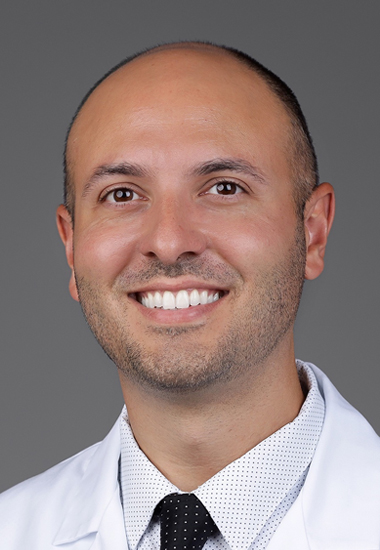
Dr. Villa
Show Notes
Resources
[00:00:00] Ioannidou: The ADA has launched the ADA Living Guideline Program, the first in oral health. Today we are learning all about this new initiative and its first set of recommendations on oral cancer. I'm Dr. Effie Ioannidou. Hello everybody, and let's get started.
[00:00:20] Announcer: From the American Dental Association, this is Dental Sound Bites created for dentists by dentists. Ready? Let's dive right into real talk on dentistry's daily wins and sticky situations.
[00:00:37] Ioannidou: Hello? Hello friends. I'm happy to welcome you back to another episode of Dental Sound Bites. Today, the episode is solo. Dr. ArNelle Wright is not with us today. However, the conversation still remains very interesting and we are excited to welcome Dr. Alessandro Villa to the show. So welcome, Alessandro.
[00:00:56] Villa: Thank you so much.
Very excited to be here today. Thank you.
[00:00:59] Ioannidou: I know it's super exciting. So, tell our listeners, people that don't know you, although I'm sure most of the people know you, but tell them a little bit about yourself, where you came from, what you are doing right now, all these interesting things that are cooking and, yeah.
[00:01:18] Villa: Yeah, no, absolutely. Um, again, my name is Dr. Alessandro Villa. I am Italian, currently Chief of Oral Medicine, Oral Oncology and Dentistry at Miami Cancer Institute, where I also serve as Program Director for the Oral Oncology Fellowship. Um, I was previously at the University of California, San Francisco. I still have a part-time appointment.
Very excited to still be working with you and your group and most of my job is around oral diseases and oral complications from cancer therapy and as oral medicine specialist. We also play a role in the diagnosis of oral cancer. So, I think today's episode it's on point and very excited to be talking more about guidelines.
[00:02:04] Ioannidou: Yeah, no, it's, it's really, really exciting and I'm very interested and curious to learn more about the ADA's Living Guidelines. So, you know, a lot of people would be like, living guidelines? What are you talking about? Are they alive? Uh, so tell us a little bit, what is that? What are we talking about? What are the living guidelines and how are these living guidelines different than the traditional guidelines.
[00:02:33] Villa: Yeah, this is a relatively new topic. As you said, living guidelines are guidelines that don't freeze at the moment of publication, instead are built on continuously updated systematic reviews.
So the plan is really to monitor the literature over time, and also includes new studies that emerge from this search and then revise. Previous recommendations when there's meaningful evidence that appears so in a way, if you think about traditional guidelines, they tend to be static, they take some years to develop, and by the time they get published, you see that the evidence may already be a little old.
So, the beauty of having living guidelines is that clinician can be more confident when they look at the recommendations. Reflect today's best evidence, which is probably, compared to static guidelines, it's more up to date instead of representing publications or new guidelines that were true 5 or 10 years ago.
[00:03:38] Ioannidou: That's absolutely true and I am happy that you brought all these points up. But, uh. How, how do you develop this in the process of the ADA and how, who is involved in the process of developing the living guidelines?
[00:03:55] Villa: Yeah, so as I mentioned, the living guidelines are basically built with the same rigor as traditional guidelines, but the infrastructure is different for ongoing updating of the literature. So, there is a multidisciplinary guideline panel that typically includes for these specific guidelines, includes general dentists, dental hygienists, oral medicine, and oral pathology specialists. There's oral surgeons involved methodologists, and more importantly, we included also patients and other stakeholders, which is unique for these living guidelines and we use the GRADE Evidence to Decision Framework so that you can move from data to recommendations in a timely manner and everything is built inside a digital platform, which houses systematic reviews, table and recommendation that are all in one place.
So, in a way, the living guidelines are built ultimately to give certainty of evidence to dentists and dental providers that have access to the guidelines and are more likely to issue conditional recommendations that are more balanced and ultimately get up to date over time. So, it's not, uh. They're not paralyzed in the process, but they are continuously built and updated.
[00:05:18] Ioannidou: Very frequently in dentistry, you know, for some of us that who have worked with systematic reviews and you know, made an effort to develop guidelines in other areas you know, how we, we face limited evidence, right? And you are eager and enthusiastic to have a bottom line, but frequently you are, you know, conflicted and perhaps missing the bottom line. So how did you deal with issues like this of limited current evidence? Uh, you frequently in the meta-analysis, and a lot of people will joke about this, oh, I don't want another one that says, you know, future research is needed. You know, not enough data is available.
So how did you deal with this and how do you, did you approach it methodologically?
[00:06:12] Villa: Yeah. So when the evidence is conflicting or limited, we don't hide it. In the living guidelines, we explicitly rate the certainty of evidence. So for example, in these specific guidelines on oral cancer, we talked about cytology adjuncts, and there's low certainty around this.
Um, and then we bring in also other domains such as patient preferences, cost equity, rather than letting a single. Imperfect accuracy estimates kind of drive the final decision. Um, so I think that, um, having a more transparent process ultimately is better for everybody so that when the evidence is limited or conflicted is, um, nicely and nicely, um, explicit there.
[00:07:01] Ioannidou: Yeah, no, that, that's a, a good idea. And I, and actually I appreciate the fact that you, um, were inclusive in terms of stake stakeholders because to have the patient voice, uh, included there, especially, especially for issues of, uh, oncology, I think that they are, uh, you know, these voices, uh, are critically important.
Uh, so, so these are living right, evolving guidelines. And, and some people may say, um, you know, how frequently does, do they, they, do they, are they revised or updated automatically? Is there someone in control of this? And uh, is there any point that you just put a period and you say, I am resting my case. No more.
We solved all the questions on this topic, so we are pretty firm on the, on the recommendations.
[00:07:54] Villa: Yeah, that, that's a great, these are all great questions. Um, obviously the guidelines are always open to change, but they're not changing, um, every week. So there are certain parameters that are set. Uh, we continuously monitor the literature, uh, typically using schedule searches and increasingly also AI assisted tools for screening. So, for example, when new studies appear and the systematic review is updated, there are certain questions that we ask. How does this change the. Um, the effect on estimates, how does this change the certainty of evidence that it's presented in the living guidelines?
Does it affect, does it affect any domains like equity or feasibility? And depending on the answer, we may not find any new evidence. There might be new evidence. But it doesn't have any meaningful impact on the final recommendations, or there are what we call practice changing evidence, where at this point the old panel that I was discussing earlier about is convened.
And so the wording may change the direction or the strength of the guidelines may, may change, but at, at some point, uh, a specific recommendation can be deprioritized in a way, what does it mean, for example, if the evidence becomes very stable, um, and high certainty, or if a technology becomes relatively old.
In that case, the, the living guidelines kind of move more to a traditional guidelines with a less, um, less frequent updated schedule, update schedule.
[00:09:33] Ioannidou: Yeah. And I assume those guidelines, um, uh, approach the recommendations through more global, uh, evidence. Right. It's not US centric, right?
[00:09:44] Villa: Correct. Exactly. So the goal is to really be inclusive and look at the evidence worldwide and not just focusing on a specific point or like specific set of evidence.
[00:09:56] Ioannidou: Yeah. No, no. I, I, this is, it's really such an important topic, but tell us a little bit more, let's talk about this very first set of recommendations from the ADA's program, right? These are on the evaluation of potentially malignant disorders in the oral cavities. So why don't you tell us a little bit more about this and what exactly did you examine and what was the, um, you know, the.
Eyeopening finding if there was any eyeopening, maybe not for you, but No, maybe, maybe not for you, but I'm sure for the rest of the community,
[00:10:29] Villa: it, it's always a learning process for everybody. Right? Um, so the first living guidelines in this series, because this will be a series of living guidelines on, um, oral cancer and oral potentially malignant disorder.
Focus specifically on cytologic adjuncts for early detection of oral cancer or oral, potentially malignant disorders. And we focused on adults in the United States. Mm-hmm. Um, and the panel looked at cytology tests as adjuncts to the clinical exam and biopsy. Um, we used, as I mentioned earlier, the GRADE Framework, um, which consists of, uh, a set of, um, of questions and a systematic approach considering, uh, arms and benefits, patient and clinician preferences, equity cost and feasibility when an adjunct is considered. And we formulated in the end three recommendations and three good practice statements.
Um, the first one is that every adult should have a proper. Clinical oral examination and updated medical, social, and dental history. And I think that this is not negotiable. Uh, we should all do it in our practices.
[00:11:44] Ioannidou: Pretty basic, right?
[00:11:45] Villa: Yes.
[00:11:46] Ioannidou: Pretty basic. Yeah.
[00:11:47] Villa: The biopsy, when a lesion is encountered, a mucosal lesion remains the gold standard for definitive diagnosis.
Of both oral squamous cell carcinoma or oral, potentially malignant disorders. And for adults with a visible pathology and mucosal abnormalities. We issued a conditional recommendation against routine use of cytology adjuncts to decide who needs a biopsy or referral. And we also suggested, um, against using cytology, adjuncts and tests as a screening tool.
In patients that are asymptomatic with no evidence of any abnormal mucosa, uh, abnormality.
[00:12:28] Ioannidou: Yeah.
[00:12:29] Villa: Uh, there is only one situation I would say where cytology may have a role when, uh, a biopsy is not possible or not indicated. So, for example, if a patient refuses, uh, the biopsy or has significant comorbidities or the lesion is extremely difficult to access.
Uh, however, this is just a suggestion. And ultimately, uh, the biopsy remains the gold standard.
[00:12:54] Ioannidou: And how do the clinicians, um, how can the clinicians implement this type of guidelines? What do you think is the best way to, to move on with those?
[00:13:06] Villa: Yeah, so these guidelines are very practical and I would think about implementation probably.
In three steps or three ways. One, get the basic right for every adult. So we talked about taking a social history, medical history, dental history. Mm-hmm. Every patient should get a thorough intraoral and extraoral examination, not just the so-called high risk patients. Uh, and then use the biopsy appropriately when lesions are present.
So if, uh, you see a suspicious lesions and mucosal abnormality. The default, the default should be a biopsy or a referral to a specialist to obtain a biopsy. And finally, I think the third step is really communicate clearly with patients. Um, I explained that these recommendations are based on living evidence that is continuously updated and summarized.
Uh, and so the biopsy ultimately is still the most reliable way to rule out or, or a disease.
[00:14:08] Ioannidou: We will be right back.
[00:14:12] Announcer Ad: For many, a smile is something we take for granted. But for a child in pain or a veteran seeking a job, a healthy smile is a life-changing gift through programs like, Give Kids A Smile and Give Veterans A Smile, The ADA Foundation connects vulnerable neighbors to the dental care they desperately need, giving them dignity relief and a fresh start. Your life-changing tax-deductible gift ensures that no one has to live in pain. Visit ADAFoundation.org to help keep the world smiling.
[00:14:50] Ioannidou: Welcome back to Dental Sound Bites. Today we are diving into the new ADA Living Guidelines Program and its first published recommendation on oral cancer with Dr. Alessandro Villa. This is a great, great work and it'll be interesting to see, how this will be either promoted in the, you know, social media platforms or being, easily communicated.
I assume that you guys have, in addition to the website, did you have any publication of the guidelines on JADA?
[00:15:26] Villa: Yeah, it's an online publication on JADA. Okay. It's all online. Yeah.
[00:15:30] Ioannidou: And it's open access, I assume, right?
[00:15:32] Villa: I believe so.
[00:15:33] Ioannidou: No. Difficult questions I have for you, Alessandro. Uh. So tell me a little bit in this process, which I know that the guideline process can be really complicated and sometimes can be very surprising.
Yeah. Any of the findings that came up were surprising to you, uh, you didn't expect to see or how, tell me a little bit about this. I'm really curious about this.
[00:15:57] Villa: That's a good question. I would say a couple of things. Um, one, the evidence base for, um, cytology adjuncts is thinner than what many people assume.
Um, for a technology that has been marketed for oral cancer detection or detection of oral, potentially malignant disorders, there were very few high-quality diagnostic accuracy studies. So, the certainty of the e of the evidence. Uh, for key outcomes, I would say is relatively low. And the second, uh, the real-world use of the adjuncts and associated data is also extremely low.
Um, so ultimately, you know, that suggests that despite a lot of. Promotional energy and marketing. These, these tests have not been widely adopted, huh? Probably because clinicians already recognize the, that biopsy is the gold standard and because, uh, cost and logistics are not, um, trivial. Um, so these, I would say these two things come to mind.
[00:17:04] Ioannidou: Gives me confidence, the fact that the practitioners rely. On biopsy.
[00:17:13] Villa: Yes.
[00:17:13] Ioannidou: That, that's, you know, I'm not, I'm not, uh, degrading the, the rest of the evidence on, uh, cytology. But I think it's really, uh, it's really important that they're doing this and it plays in their mind as the, you know, choice.
Definitely. 'cause one, the other thing that I would think about is perhaps people are also very much intimidated with the diagnosis of oral, uh, malignancy. And they just, you know. Try to kind of turn the page and ignore it and immediately refer.
[00:17:40] Villa: Yes, very true.
[00:17:41] Ioannidou: You know, so this is a, yeah, it, it is an intimidating for a general practitioner it is definitely an intimidating process. The, uh, even the initial stages of diagnosis of, uh, even for specialists for us that are outside the oral medicine, uh, field. It's having a lot of responsibility to be able to go through this process. So I'm glad that people are thinking about biopsy as a, the first line of, uh, you know, approach and so what do you think, are you predicting any barriers in the way that these guidelines will be adapted? Or do you think that they will be from the beginning well received and. All good.
[00:18:24] Villa: Yeah. You know, I, I think as dentists we are used to, um, see guidelines, especially through the American Dental Association.
I think, uh, we all look up for it, and we always search for the best evidence through, uh, the ADA on the guideline side. Um, sometimes clinician interpret a conditional recommendation against, as you must never use it in reality. I think I'd like to clarify that a conditional recommendation means for most patients we, we suggest to not use it, but there might be certain, um, circumstances where it's reasonable after a shared decision making process.
Right. Uh, and of course the, I think the biggest barrier is off. Then not the adjunct at all, but it's access to a basic clinical and oral examination and biopsy. To your point, um, some providers may not feel comfortable, uh, taking a biopsy. Yeah. But I think we work as a team. There's different specialties in dentistry and we can refer patients to each other and ultimately, um, help, you know, provide the best treatment to, to our patients.
[00:19:30] Ioannidou: A hundred percent. Uh, this is a very good point and another thing that I'm thinking as you speak about the, um, how to safeguard the, the, the barriers and even misconceptions or anything, uh, it'll be even interesting to find, to ask you, how do you think, where do you think the place of those living guidelines is in dental education?
Like, uh, because we are expecting from our. Uh, clinicians to, you know, adapt, follow, and try to implement. Uh, but the reality of the matter is that we, we, as a community, we need to start this, um, training and, uh, and, and educational process earlier. In, in their, as they are in dental school. Right. I mean, this is how I see it.
I, I mean, you, I'm, I'm, I'm curious to see what you think about this.
[00:20:25] Villa: Yeah, no, a absolutely. I mean, I think this is the best place to start, right? Ultimately, uh. Future dentists or dental future specialists that are in school, uh, should familiarize with these guidelines that provide the best and most up to date evidence for their practice.
So I would love to see it incorporated into our teachings in academia. I think that's, that's the way to go. And then, uh, whomever is already in practice has the opportunity to have easy access to the guidelines. And, uh, make sure that they practice the best up-to-date evidence in their offices
[00:21:01] Ioannidou: because, um.
As you know, CODA, the Commission on Dental Accreditation, requires evidence-based, uh, courses and evidence-based approaches in dental education. What is better than a living guideline exactly to satisfy right, to satisfy. Um, the standards expect and the expectations of CODA. Like, uh, I think it's really, really important for our dental schools to be the first to adapt and follow through this and actually make sure that the, the, the students as students are familiarized with the living, the concept of living guidelines.
[00:21:42] Villa: No, absolutely. That's, that's,
[00:21:44] Ioannidou: I think so. I mean,
[00:21:44] Villa: I, I love that idea and I think ultimately we're doing this for any dentist, including future dentists, so. What's the best way to do it? Let's, let's introduce the guidelines into dental schools.
[00:21:56] Ioannidou: Exactly, exactly. This would, this would be a a, a huge buy-in community and when the people buy in, when they're students, they get used to this and they expect to stay updated and they will ask for it now.
This is so great. I love this discussion.
[00:22:11] Announcer: On the next. Dental Sound Bites.
[00:22:13] Wright: We're taking a closer look at advocacy at the ADA.
[00:22:16] Rosato: Advocate for things like fluoride and insurance reform. Yes, those are important, but what about things right down to things like occlusion, TMD. What if someone decided that, that somebody else knew better than us?
We literally had signs on people's grass to get this bill passed because we approached it through a patient's perspective.
[00:22:43] Ioannidou: I am so, uh, uh, proud for the work that you guys, um, have done with the living guidelines, and I think it's really critically important to have a live document, uh, updated and follow through. And, uh, yeah. Any, anything that you think that we didn't discuss and you would like to bring up as a take home, uh, take away message?
[00:23:07] Villa: Yeah. You know, I, I think. The most powerful tool that. We have is we can really, you know, save a patient life as dentists when we detect early, uh, oral, potentially malignant disorder or an oral cancer, right? So the most powerful tool that we have is as of today, early detection. So I cannot stress the importance of a careful clinical, oral, and extra oral examination and followed by a timely biopsy.
Uh, when something doesn't look right, uh, we cannot be wrong about that. And I think that these guidelines, once again, emphasize this. And, uh, there will be more, um, more to come, more topics. So I'm very excited. And, uh, yeah, just, just, uh, check for the living guidelines.
[00:23:58] Ioannidou: Th this, this is great. This is amazing.
Thank you, Alessandro. So much appreciate the fact that you had the time to join us and bring this important topics up for, for us and for our, uh, audience and, uh, and including our students and our, uh, clinical practitioners in our academicians that maybe, uh, listening to us. So it was great. Great having you.
I appreciate it. Thank you so much.
[00:24:24] Villa: Thank you for having me. Thank you everyone.
[00:24:26] Ioannidou: Just a friendly reminder. Uh, we will have all the resources and information mentioned in this episode linked in the show notes on ada.org/podcast. And if you like this episode, share it with a friend, then be sure to follow us on the ADA social channels and hit subscribe wherever you listen so you never miss an episode.
You can also rate this episode or write a review so it helps more people find out about our show. Goodbye everybody.
[00:24:58] Announcer: Thank you for joining us. Dental Sound Bites is an American Dental Association podcast. You can also find this show’s resources and more on the ADA Member App and online at ADA.org/Podcast.
The views and opinions expressed in this program are those of the speakers and do not necessarily reflect the views or positions of the American Dental Association.