The strongest resources to aid oral health professionals in clinical decision-making. Developed by a guideline panel, clinical and health guidelines critically appraise, summarize, and interpret relevant evidence to formulate recommendations that can be applied to patient care. Explore current clinical and health guidelines below.
Clinical Practice Guidelines and Dental Evidence
Our collection of evidence-informed clinical practice guidelines that will help you improve your practice.
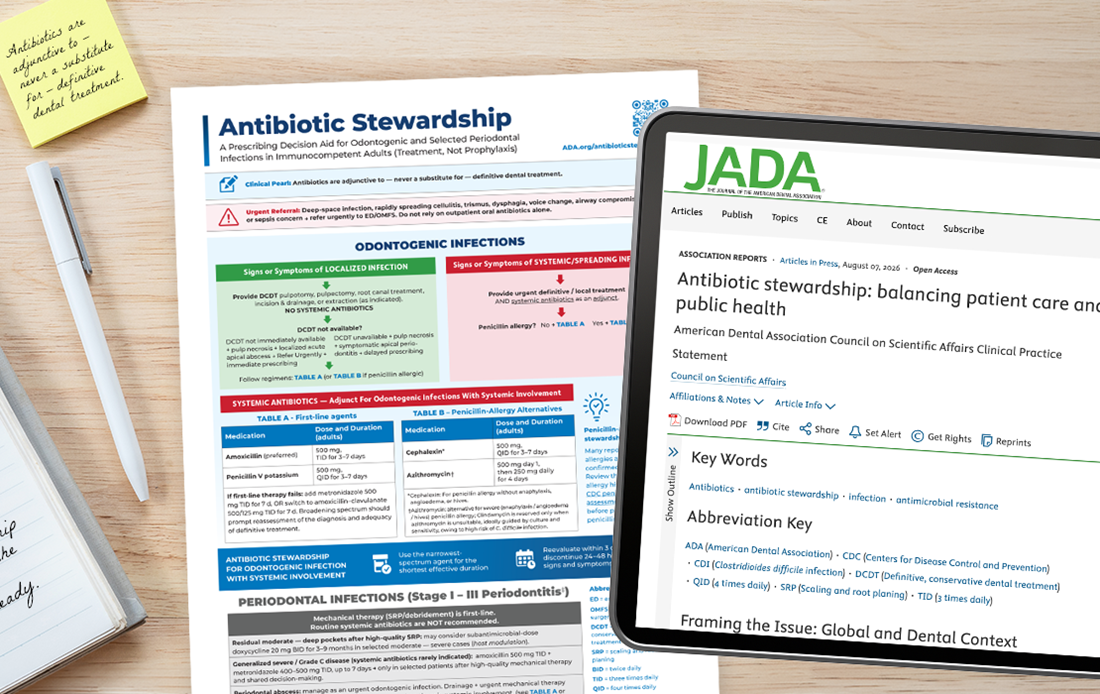
Antibiotic Stewardship Clinical Practice Statement (2026)
The ADA Council on Scientific Affairs reaffirms the importance of antibiotic stewardship in a new clinical practice statement.
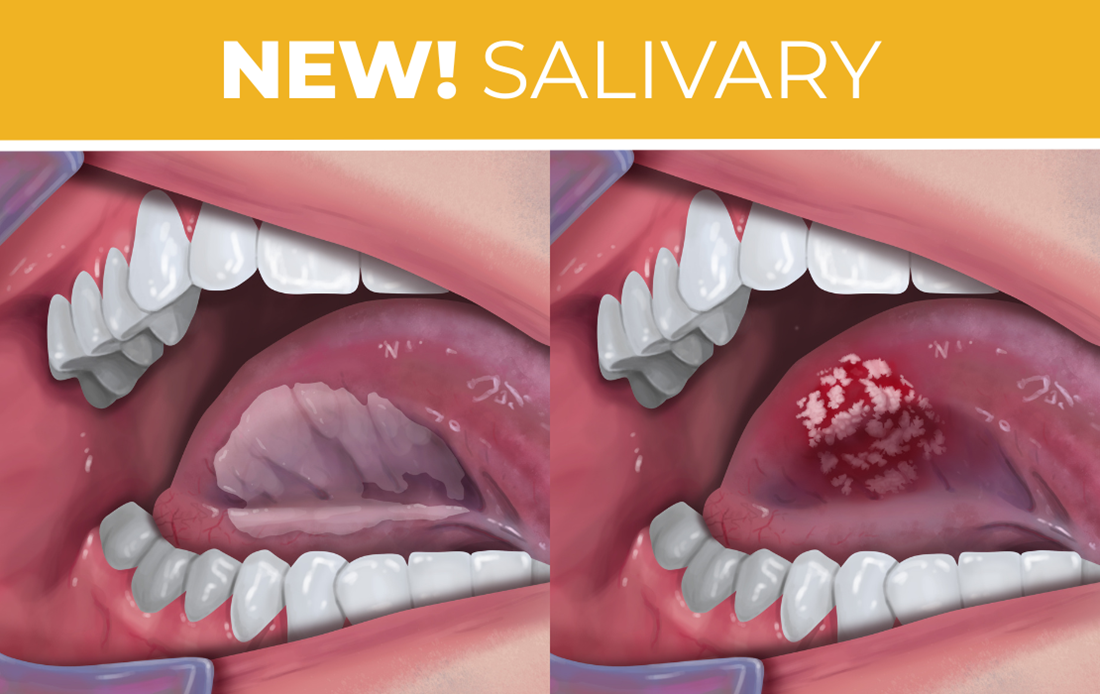
Oral Cancer Guideline (2026 Update)
These updated recommendations guide the use of cytology, vital staining, light-based and salivary adjuncts for early oral cancer detection in an interactive format.
Evidence-Based Clinical Practice Guidelines
- Anesthesia and sedation teaching (PDF 2026)
Education requirements for minimal and moderate sedation training.
- Anesthesia and sedation use (PDF 2026)
Clinical use of sedation in dental practice.
- Antibiotic stewardship: balancing patient care and public health (2026)
Clinical practice statement on appropriate antibiotic use in dentistry. - Antibiotics for dental pain and swelling (2019)
Antibiotic use for pulpal and periapical-related dental pain and intraoral swelling. - Periodontitis treatment (2015)
Nonsurgical treatment of chronic periodontitis with scaling and root planing, with or without adjuncts. - Antibiotics to prevent prosthetic joint infection (2014)
Antibiotic prophylaxis for dental patients with prosthetic joint implants. - Antibiotics to prevent infective endocarditis (2008)
Antibiotic prophylaxis for patients at risk of infective endocarditis.
Caries Management
- Restorative caries treatments (2023)
Selection of restorative materials and caries removal approaches.
- Nonrestorative caries treatments (2018)
Nonrestorative caries treatments, including silver diamine fluoride (SDF).
Caries Prevention
- Sealants for caries prevention (2016)
Use of pit-and-fissure sealants to prevent dental caries. - Fluoride toothpaste for young children (2014)
Fluoride toothpaste recommendations for children under six years of age. - Topical fluoride for caries prevention (2013)
Use of topical fluoride agents, including varnishes, gels, foams, rinses and pastes. - Non-fluoride caries prevention agents (2011)
Non-fluoride agents for caries prevention, including sucrose-free polyol chewing gums, xylitol dentifrices, and chlorhexidine.
Oral cancer (Living)
Interactive recommendations on adjuncts for early detection of oral cancer.
Interactive recommendations on adjuncts for early detection of oral cancer.
Pain management (Living)
Management of acute dental pain after tooth extraction or for temporary toothache relief.
Management of acute dental pain after tooth extraction or for temporary toothache relief.
Periodontitis treatment (2015)
Nonsurgical treatment of chronic periodontitis with scaling and root planing, with or without adjuncts.
Nonsurgical treatment of chronic periodontitis with scaling and root planing, with or without adjuncts.
Patient selection x-ray recommendations (JADA 2026)
Patient selection criteria for 2-D and 3-D dental imaging featuring clinical scenarios.
Optimizing radiation safety (JADA 2024)
Appropriate dental X-ray use and updated radiation safety practices.
Education
Want to learn how to incorporate the latest scientific evidence into clinical practice? Check out these brief educational videos that demonstrate the techniques and principles of evidence-based dentistry.
Evidence-Based Dentistry
ADA Policy Statement on Evidence-Based Dentistry: The ADA defines the term evidence-based dentistry as an approach to oral health care that requires the judicious integration of systematic assessments of clinically relevant scientific evidence, relating to the patient’s oral and medical condition and history, with the dentist’s clinical expertise and the patient’s treatment needs and preferences.