






You can also listen on the ADA Member App.
Dentistry with Purpose
Description: We’re talking about the power of giving back and the many ways dentists are making a difference in communities across the country.
Featured Guest: Dr. Rita Cammarata
“Where you really can determine if you're successful is the kid that gives you the hug when they leave Give Kids A Smile because they've had a positive experience. The veteran that tells you, hey, you've given me back my dentistry through the healing that comes from your hands. And the gratitude when you hear from a dentist who says, I was down and out, and you reached out and gave me a hand and helped me up. And then to those dental students that right now don't even know we exist, but here we are coming with scholarships for them. At least for me, that's how I think we determine whether we're successful or not.” — Dr. Rita Cammarata
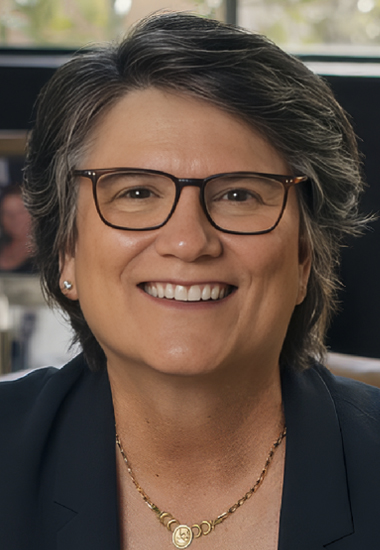
Dr. Rita Cammarata
Show Notes
Resources
[00:00:00] Wright: We're exploring the power of giving back and the impact dentists are making beyond their practices. Join us as we share some of the inspiring ways dentists are making a difference. I'm Dr. ArNelle Wright.
[00:00:11] Ioannidou: And I'm Dr. Effie Ioannidou. And today we've got a powerful conversation about service and generosity, and more importantly, the lives changed when dental professionals give back.
So let's get started, ArNelle.
[00:00:28] Wright: Let's do it.
[00:00:32] Announcer: From the American Dental Association, this is Dental Sound Bites, created for dentists by dentists. Ready? Let's dive right into real talk on dentistry's daily wins and sticky situations.
[00:00:48] Wright: Hello. Hello, friends. As you know, we're headed into a season that's focused on gratitude and giving. So I'm wondering, Effie, can you tell us what you're most grateful for?
[00:00:58] Ioannidou: I mean, obviously, I have to say family first.
[00:01:00] Wright: Yeah.
[00:01:01] Ioannidou: And then our audience, our community-
[00:01:05] Wright: Yeah ...
[00:01:05] Ioannidou: our dental professionals that are surrounding us.
[00:01:09] Wright: I love it.
[00:01:09] Ioannidou: Right?
[00:01:10] Wright: Yeah.
[00:01:10] Ioannidou: What about you, girl?
[00:01:12] Wright: Well, yeah. You know, I would have to say my family, definitely life, health, and strength, because I've seen some things, um, and just, um, the amazing unique opportunities that we get to have here in the dental journey. Like, I'm on a new journey, and, um, it's been really, really good.
[00:01:28] Ioannidou: No, I love following- ... your journey. I really do.
[00:01:31] Wright: Oh, thank you. Well, we really wanted to highlight something else that we're all grateful for, which is the great work that dentists and dental teams are doing in their communities.
[00:01:41] Ioannidou: And I think we, we have the best, the best guest to kick off this conversation.
[00:01:48] Wright: Let's do it.
[00:01:49] Ioannidou: So let's welcome Dr. Rita Cammarata. And how do you like the accent of Cammarata? I'm sure you like this, right? Cammarata.
[00:01:56] Cammarata: Yeah, exactly. You speak a little Italian, huh?
[00:01:59] Ioannidou: I, actually, I don't, but I can imitate it well.
[00:02:02] Cammarata: You can.
[00:02:04] Wright: Oh, well, welcome to the show, Dr. Cammarata. Can you tell our listeners a little bit about yourself?
[00:02:09] Cammarata: Yeah. Well, thanks for having me here today. I'm very excited to be with two ADA, uh, celebrities here, but- Oh. Oh, yeah ... yeah. Yes. Well, I'm a pediatric dentist from Houston, Texas. I, um- Started out in, you know, organized dentistry years ago when I was a resident and just kind of stayed in it. I've kind of been involved in various aspects of organized dentistry, the state and local levels.
And currently I'm the 15th District trustee to the ADA Board of Trustees. And, uh, this past year I was selected to be the chair of the ADA Foundation, which I'm very excited about. And so I've spent- I'm going into my second year, and we've done some great, um, e- exciting things at the foundation, and I'd love to tell you all about it.
[00:02:56] Wright: Oh, we can't wait to
[00:02:57] Ioannidou: hear. Oh, that's exciting. I'm all ears. Yes. You know, I've been around in, in, in dentistry for quite some time now, and, uh, it seems to me that our, um, community, our, um, colleagues, the dentists seem to be, uh, having an interest in volunteer work. And, and this happens throughout their career, throughout, uh, their, their life.
They make time to give back. So what did this commitment to service, uh... how did this be- begin for you? And, and, and what is that, you know, service has that excited you and you decided to take this route?
[00:03:37] Cammarata: Yeah, you know, I don't, I don't know where it first started, but I think I've always, um, had, you know, serving others in my heart.
I think that's why I went into a healthcare profession like dentistry. Just that serving attitude, I think has just made me successful in my career. But, um, you know, specifically, there was a mom in my practice one day, and she was telling me about she was raising money for, um, therapeutic horse- horsemanship for, um, children with disabilities.
And I said, "Well, h- do, do you find it hard to ask for money for that?" And she said, "Absolutely not. It's not for me, it's for those kids." And from that point forward, I knew this would be an easy thing for me to do. So to be in the foundation or in, in various aspects of other things where you have to, you know, ask people to support, it's, uh, it's become very easy once I kind of heard that from her.
But I think that, that giving back, that caring, um, you know, and, and all the good that can come out of philanthropy is what not only resonates with me, but I think it's what resonates with our profession. We're givers, we're healers, and, uh, we all know that as we go through these things, we, we get back more than we, than we ever give.
So, um, that's what I think resonates with our profession.
[00:04:54] Wright: That's so good.
[00:04:55] Ioannidou: I think that that's, you know, it's actually so true, right? Mm-hmm. And, and we don't give back only in our immediate communities, um, locally or nationally, but so many d- dentists- Yeah ... travel internationally to give back, which is so amazing.
[00:05:12] Wright: Mm-hmm. Yeah. I had the opportunity to do some, um, giving back when I was in dental school, and that was, that just opened up a whole world for me in dentistry. I didn't even know that it was, like, something that people did even well after they're out of dental school. And so, um, doing mission trips and things like that has really, like, opened my eyes and yeah.
So I'm excited that we're having this conversations.
[00:05:35] Ioannidou: Oh, for sure.
[00:05:36] Wright: Yeah. Well, one of the things that we see often, um, with the foundation and giving back, and the most visible example of this spirit of giving and serving our community is through the Give Kids a Smile program, which helps children get access to dental care.
So we do have a brief clip from the event's founder, Dr. Jeffrey Dalin. Please take a look.
[00:05:58] Dalin: We still have kids in this country that can't sleep at night, can't eat their food properly, can't pay attention in school 'cause they're having problems. Uh, it's inexcusable in our minds that this is still happening.
We have very specific skills that nobody else in the world can do. We should be able to use our skills to, to deliver dental care to those who have no access to dental care. At first, it started as a, a, a families might call this 800 number and say, "We need help. We, we lost our insurance. We don't have access."
I could call up and say, "How about assigning me a couple families this month?" And I would take care of the entire family. Four months later, we put on our very first clinic. We saw in two days, on a Friday and a Saturday, 325 children, and we did comprehensive dentistry on every child. It was wonderful. It was fun, rewarding, exhausting, and therefore, Give Kids a Smile was born right then and there.
I thought, "Everybody can do this around the country." Called the American Dental Association, and, and within a couple months, they adopted it as their national dental children's access program.
Just to think that millions and millions of kids have been seen just because we came up with this idea to have this Give Kids a Smile clinic, I, I don't even know what to say.
It's,
it's just, it's unbelievable. So my message to everybody here, if you've worked in a Give Kids a Smile program, I wanna thank you, and if you've never done it, try it. Once you do it once, uh, you're, you're hooked. That's all I can say. You'd, you just... You know what you're doing for these kids.
[00:07:30] Wright: Oh, that was so good.
So that leads us into a, a question that I have for you, Dr. Cammarata. You've been very involved with this program. Why don't you tell us a little bit more about its impact and how it serves multiple communities?
[00:07:44] Cammarata: Yeah. Well, you know, Give Kids a Smile, Dr. Dalin's right. He has been around for 25 years. He and Dr.
Storm started this in 2002 in St. Louis, as he said, their, their very first one. And this year in Long Island, we're gonna, we're give, our, uh, national kickoff event is gonna celebrate our 25th, um, uh, national kickoff. So it's very, it's gonna be very exciting. But, you know, I remember chairing these events way back in the day when I was a much younger dentist, and over time, this Give Kids a Smile has gone from a one, two-day event to a whole month.
[00:08:17] Wright: Mm-hmm.
[00:08:18] Cammarata: We're, we're very happy that, you know, we've kinda taken over February with, uh, Give Kids a Smile. But, um, you know, the, the good thing about Give Kids a Smile is how it does affect your community, and it can, it can affect your community in any way that you choose. So there's no one size that fits all for, for Give Kids a Smile events.
It can be, you know, just simple dental education at a preschool or a daycare, or it can be a full-blown event like Dr. Dalin was talking about. You can, uh, you know, set this up in your office. You can go to a dental school and have a, a multi-chair event. It can be whatever you want it to be, and it can, it can f- you know, fit and, and, uh, fulfill your community's needs in whatever manner you, you can envision.
[00:09:04] Wright: I love that.
[00:09:05] Cammarata: Yeah. And the o- the other good thing about this is we get to partner with some of our, um, corporate, uh, colleagues. Uh, Henry Schein Cares, Colgate, CareCredit, they've all been big supporters of Give Kids a Smile over the years. And what that has allowed us to do is 25,000, 25,000 volunteers a year provide more than 300,000 children a year with greater than $10 million in dental care.
All of that through the generosity of not just our corporate sponsors, but those volunteers that, that come in and provide care for those kids.
[00:09:45] Ioannidou: So in other words, this care and this, this m- tremendous number of kids that receive care, it's all- basically it's a, it's, it's a, a ph- philanthropic care, right?
They are, they are, they receive care for free, correct?
[00:10:00] Cammarata: Absolutely.
[00:10:01] Ioannidou: Wow. Impressive. It is really impressive.
[00:10:04] Wright: One thing that I really love, and you mentioned this about taking over the month of February, I love seeing how all of the different dental practices, dental students, dental, um, hygiene teams, like, like everybody has a different approach to it, and they're impacting people, to your point, in such a unique way that fits in their community.
And so I, I, I love that so much, like that there's just so much freedom for you to just impact and give back in a way that's really, really meaningful. Yes. So, um, I'm looking forward to seeing all the things coming this coming February.
[00:10:36] Ioannidou: It is very, very, uh... It's an amazing service. Yeah. Uh, and, and I wonder, uh, uh, thinking about the information that our audience may need to have, especially our you- younger, more junior dentists, so how can their, they or their dental teams get connected with, uh, Give, uh, Kids a Smile?
How can they get involved?
[00:10:59] Cammarata: Yeah. Well, it's fairly easy. First thing you need to do is go to adafoundation.org, click on the Give Kids a Smile tab, and there's a ton of information there. It's got a local map of events. If you wanted to start your own event, there's a, a wealth of resources there that tells you how to start to, to starting to develop a, uh, an event in your area.
Um, and that's specific to just dentists in a single practice or a whole dental school, um, worth of, of, of dentistry or an event that you wanna do. But, um, you can also contact your local dental societies. They typically know where these events are happening, and they can, they can lead you in the right direction.
[00:11:37] Ioannidou: Which is so important.
[00:11:38] Cammarata: Yeah.
[00:11:39] Ioannidou: That's wonderful.
[00:11:39] Cammarata: Yeah.
[00:11:40] Wright: Yeah. Organize dentistry, people.
[00:11:42] Cammarata: Absolutely. Yeah. Yeah. You know, ArNelle, you are absolutely right. It takes a whole dental team. It
[00:11:49] Wright: does.
[00:11:49] Cammarata: We, we need volunteers, dentists, assistants, hygienists, um, you know, just a- any and everyone can, can help at these events.
[00:11:57] Wright: It's all hands on deck.
[00:11:59] Cammarata: Yeah. And, and at the end of the day, the good thing about these events is that kids go away not just with a smile on their face and a positive attitude because of the experience they've had at the dentist, but, um, we're also looking to make sure those kids leave with a dental home so that care can continue, and that, I think, is the most important thing that these events can do.
[00:12:23] Wright: Yes. That's important. Ah.
[00:12:25] Ioannidou: But can I ask, a- as the... So their, their dental home becomes the Give Kids a Smile, or the dental home would become a, a, a referred- Yeah ... uh, referral practice? Correct. And then if indeed it's a referral, then, uh, is the issue of affordability again an i- a, an issue, a continue- Issue?
[00:12:46] Cammarata: Yeah, and it can be, but, you know, one would hope that, that as these, as a dentist picks up a child for, to become their dental home, that they would be able to work out some of that with the parent or maybe just provide that care pro- pro bono if they've chosen one or two kids that they're gonna take care of.
I know in, in my office over the years, we always had a family that, you know, I just said, "Come in. We're just gonna do whatever you need." They are the most grateful par- parents and patients. Yeah.
[00:13:15] Wright: Ah, so awesome.
[00:13:16] Ioannidou: We will be right back.
[00:13:19] Announcer Ad: For many, a smile is something we take for granted, but for a child in pain or a veteran seeking a job, a healthy smile is a life-changing gift.
Through programs like Give Kids a Smile and Give Veterans a Smile, the ADA Foundation connects vulnerable neighbors to the dental care they desperately need, giving them dignity, relief, and a fresh start. Your life-changing, tax-deductible gift ensures that no one has to live in pain. Visit ADAFoundation.org to help keep the world smiling
Did you know that ADA members are making a big impact on dentistry? Together, we're fighting for community water fluoridation, advocating to improve access to care, pushing for dental insurance reform, working to ease the student debt burden, and driving workforce improvements. But we can't do it without you.
Our unified voice is critical in driving real change. Help us advance the future of dentistry by renewing your membership for twenty twenty-six at ada.org/renew, or by becoming a member at ada.org/join.
[00:14:37] Ioannidou: Welcome back to Dental Sound Bites. Today, we are talking about the power of giving back and how dentists are making a difference one smile at a time with Dr. Rita Cammarata.
[00:14:50] Wright: There's another population facing barriers to care, and that's our veterans. This group has given so much in service to others but now needs our support. Let's listen to how Give Veterans a Smile is supporting veterans in their time of need
[00:15:05] Wigfall: I would really not go to the dentist because it, it's pricey.
I lost a tooth
[00:15:11] Meyer: I have my dentures. I'm still getting used to them. It will very much have an impact on my life in a great way.
[00:15:18] Wigfall: So for anyone that's looking to help out a veteran, every little thing helps, and it matters, and it makes a difference.
[00:15:26] Wright: Yeah. I remember, um, being at one of the annual meetings, and I saw the packing of, like, the bags for Give Veterans a Smile, and it, it was at one of the ADA meetings that I learned about Give Veterans a Smile.
So I would love for us to talk a little bit about that program. Um, maybe we can start with why access to care is so challenging for veterans. Um, you can share a little bit about that, and then we can talk more about the program.
[00:15:52] Cammarata: Yeah. So, um, you know, why is it so challenging for veterans? That's a question I wish you didn't have to ask and I didn't have to answer.
I know. Yeah, because our service members, they've sacrificed so much for this nation and for our freedoms. They deserve to be taken care of. But what we know is that 82% or about 7.4 million veterans that are enrolled in the Veterans Affairs healthcare system just simply do not qualify for dental benefits.
And unless a veteran is 100% disabled, fully disabled, they're ineligible for these, for, for the dental benefits. So working... So what we're doing through Give Veterans a Smile is working to bring national attention to the unmet oral healthcare needs of our veterans. So this program, we're trying to develop a mechanism where the veterans, um, can receive pro bono care.
It's one of the mechanisms, um, to help these adults, but we know that when we put together these programs, say in a dental office, uh, this is much different than providing care for kids because their care can become much more complex. So it is a bit challenging, but it's a challenge we need to accept and, and to try to overcome.
But ultimately, once again, we want these veterans to find a dental home, and it's a very good question that you asked, Effie. What about the, the cost? What we're looking for is a, a dentist that's willing to take on a veteran pro bono and help them, uh, with their care to, to, to get it and to get them healthy and then to continue that care.
So, um, yeah, one of the main focuses that, that we're trying to, to put on this nationwide is to find a dental home for each of those veterans.
[00:17:37] Ioannidou: It is so sad though, right? I mean, these people have sacrificed so much Many of them have chronic diseases, and I did a little bit of research on that. Um, and, and again, I'm not, uh, uh, you 100% you know way more than me, uh, but it seems to me that even if you have a well, um, uh, a determined chronic disease that is esta- that, with an established connection to, um oral health manifestation.
Say diabetes periodontitis. Easy peasy, right? Everybody knows that. Even that, it will be v- it, it will re-require a tremendous effort to get it, uh, approved and prove eligibility for dental care, right? So it's not a straightforward thing, which it blows my mind. How is it possible?
[00:18:29] Cammarata: Well, yeah, you're absolutely right.
It, it... I think it blows all of our minds why, why can we not help these veterans? But, you know, ultimately, what we're trying to do is to show that y- there are so many veterans that are, that are not being served.
[00:18:44] Ioannidou: Yeah.
[00:18:44] Cammarata: You know, with Give Kids a Smile, we're using, uh, the SUNY School of Dentistry to gather and a- a- gather data and assess that data through our Give Kids a Smile events.
We're trying to do the same thing with veterans, so we can gather this data, um, assess it and use it for legislation, for financing, and any other vehicle we can, we can help establish to assist these veterans in getting the care they need.
[00:19:08] Wright: And so, well, can you tell us a little bit about how we can get involved and give veterans a smile?
Like, what's the first step in participating with the program?
[00:19:18] Cammarata: Yeah. Well, once again, adafoundation.org.
[00:19:21] Wright: Okay.
[00:19:21] Cammarata: Click on the Give Veterans a Smile tab, and there's a, um, a, a wealth of, of resources there. But also, you can sign up as a provider if you're willing to, to help out a veteran- I'm a provider ... and do some pro bono work.
And so we take all of that information- Yes ... that you put in there. We're putting it in a database, so a veteran now can go to that site, click on the map, click on their area, and find, um, offices that are willing to help. And so they do all of that through adafoundation.org, and the resources are, are there for you as a provider or the, the veteran as a patient.
And once again, these Give Veterans a Smile programs can be unique to whatever you want them to be. It can be in your office. It can be, um, a, once again, in a dental school. What- whatever you want it to look like, um, can, you know, can take on any shape.
[00:20:15] Wright: Do you have any data on the amount of veterans that know about the program, that reach out through the ADA Foundation?
[00:20:22] Cammarata: Yes, I wish I did, but
[00:20:24] Wright: Ah, okay.
[00:20:24] Cammarata: I don't exactly have that information, but we do have, we do have the information, so.
[00:20:29] Wright: Yeah. Okay, so a lot of people get the information. Do you, do you market it through, you know, like the VA and things like that too? Because I know, I understand that the VA is really booked out.
When I have veterans come into my office, they're really booked out, and then they have to be referred to my office-
[00:20:44] Cammarata: Yeah ...
[00:20:44] Wright: in order to come in.
[00:20:45] Cammarata: So what we do is we partner with different veterans organizations like Disabled Veterans National Foundation.
[00:20:52] Wright: Okay.
[00:20:52] Cammarata: Um, that's where you saw the pack and give back that you talked about.
Ah. This is our fourth year to, to work with them. We pack, um, you know, care, care packages that are given out at different events. But we also partner with Dental Lifeline Network that, that reaches out to veterans, Everyone for Veterans, Tunnels to Towers. They're, they're developing a dental program. Um, those are the ways that we can reach out to veterans, um, to, to get the word out that these events will be happening and, and they can receive some care.
[00:21:23] Wright: Yeah. Very good
[00:21:25] Ioannidou: It's, it's, it's so good. Uh, and, and, you know, w- when we speak about all these initiatives, Ev, the, the one common denominator for these initiatives is the ADA Foundation, right? Absolutely. So you have- Meh, meh, meh, meh ... referred to the ADA Foundation, uh, uh, almost in every question. So tell us a little bit about the foundation's, uh, mission, the, the, m- the, the mission to support dentists and families and students-
[00:21:52] Cammarata: Yes
[00:21:53] Ioannidou: and students, our learners, right, in difficult moments. So what are some of the needs within our, uh, dental profession that people may not realize that the foundation supports?
[00:22:04] Cammarata: Yeah. So, uh, you know, we, we support our colleagues in three different ways. One is through our charitable assistance grants program, one is through the disaster relief program, and one is through our student scholarship program, and that one's brand new.
But, um, charitable, charitable assistant grants, we take applications from dentists who are kind of down on their luck, have had hard times, may be disabled, and these people typically on a, uh, they have no assets and they're on a very fixed, limited income, typically through disability, uh, social security.
And so their, their benefit may be, what, $2,000 a month. The foundation, we have currently, I think, eight to 10 different individuals across the country that we support to the tune of 24, 36, $48,000 a year that we give to them to supplement their income. With that, they can put themselves in better living conditions.
They, um, can help pay for some of their meds. They can help with their transportation needs. So they can use those monies, um, in a variety of different ways, but it's their t- their dentist, any dentist, you don't have to be a member. Any dentist or their families can apply and, um, if eligible, they can receive those grants.
And so that's one way that, that we help our, our colleagues in the profession. The other is through disaster relief, uh, grants and funds. Um, anytime a national disaster occurs and, and the area has been declared a national disaster, those dentists can apply and receive, um, a, an immediate, uh, you know, a donation for an immediate needs, um- Uh, help.
So you need, uh, you need immediate food, water, clothing if you've been in floods and you've lost everything. That's where these, these, uh, funds come in. But what our foundation does, what the ADA does, is we donate to state dental associations or their foundations, and that way they can distribute to the, to the local dentist because, you know, boots on the ground, um, is much easier to get that distribution of funds out for those, for those individuals.
[00:24:23] Ioannidou: I'm very interested in the student- Yeah ... uh, support. So tell us a little bit about this, uh, nice initiative.
[00:24:30] Cammarata: Yeah, I know. We're very excited about our dental student initi- our dental student scholarship initiative. You know, a year ago almost to today, Dr. Gary Oyster out of North Carolina and his wife Sharon donated half a million dollars- Wow
to start the dental student scholarship fund. I remember that. We're extremely excited about this. Yeah, it was, it was so exciting. And, uh, and Gary gave because he said someone gave to him, and his only qualification was the student had to be, uh, in, in good standing academically, and they had to have a financial need.
And knowing what costs are today, I think Dr., um, Oyster was very generous in his, in his gift. But that th- that award can help these students with what books or, or instruments or just food. I mean, we know about- Sure ... food insecurities in dental schools today. Of course. So anything that, that we can do to help.
And this year we'll give out two $5,000 scholarships as this fund builds, and we're looking to build it to a full endowment. Um, we can use that interest and hopefully increase the number of scholarships we can give each year, and then eventually increase the amount. So this is where we're starting, and I think it's gonna be one of the biggest things that, um, that the foundation will eventually be able to do, and all from Dr.
Gary Oyster.
[00:25:53] Wright: Yeah, he got the ball rolling, got us, got us all excited.
[00:25:56] Cammarata: He did.
[00:25:56] Wright: I think it's a great time to say, "Ha, thanks to Dr. Oyster," 'cause I- Absolutely ... definitely wanna be someone who can give back in that way. Not even close yet, but that's definitely one of my goals because I, too, have been given to, um, a lot throughout my lifetime.
So I'm so glad you shared that with us. We do have a powerful clip from a dentist who has received one of the grants that you mentioned from the ADA Foundation. So let's take a moment to hear Dr. Roy's story
[00:26:23] Roy: Hi, my name is Dr. Tahina Roy. I'm here today to tell you my story on how the ADA Foundation helped me.
We go back to May two thousand sixteen. I am an orthodontist in New Jersey. I had a small ortho practice and a small child, my daughter Reina. She was two and a half years old at the time. Went to bed one night, totally normal, and the next morning I woke up having difficulty moving my arms and legs. And I sat down on the top of the stairs, and then I couldn't stand back up even though I was trying, and my brain was telling my body to stand, but I couldn't stand.
I got diagnosed with a very severe form of Guillain-Barre syndrome. It literally happened out of nowhere. In twenty-four hours, I went from totally normal to a quadriplegic. During this whole time, I couldn't see any patients. A number of doctors told me to turn to the ADA Foundation to see if they could do anything for me.
The ADA Foundation was able to give us a grant for a year, which really helped keep things stable in my life for my daughter. We're all doing much better now. It took us about a full year to get back on my feet, literally. She was young enough to know that mommy was broken. Those were the words that she used to use.
She would call me broken I would urge you to think about supporting the ADA Foundation. It really helped me out in a very difficult time. I have kept myself busy in dentistry in other ways, and I stay a member of the ADA because they really were there for me when I needed them.
[00:27:54] Wright: That's a story that had to be told.
Wow. That was so good. See, we would never know that these stories exist, you know?
[00:28:01] Ioannidou: Yeah.
[00:28:01] Wright: I'm so glad we're sharing this.
[00:28:03] Ioannidou: Ah, 100%, and- and- and it's so important to put things in perspective, right?
[00:28:07] Wright: Yeah, like out of nowhere.
[00:28:10] Ioannidou: I think about myself now sitting here in front of two screens, getting stressed about reports- Yeah
and deadlines, and then, you know, there it's... Life is so much bigger than this. But oh, how grateful all of us should be about the work that the ADA Foundation does. Uh, and if you had to pick, Rita, one of the, the, the thing that makes you most proud of, what would you say?
[00:28:35] Cammarata: Wow. Well, you know, it's hard to pick because there's so many things, and the members of the ADA, because there are so many things that they could be proud of.
You know, we talk about helping veterans, helping kids, students, our own colleagues. Um, I'm very proud of our foundation board, the corporate partners that we have, and our, our foundation staff. The work that they do, they put together, um, a, a, a, a foundation that does good, and it's crea- And we've, we're creating right now.
We're creating a phil- philanthropic culture at the ADA, which has been there, but it kind of waned, and now we're, we're bringing it back, and we're getting, we're, we're getting that, um, that philanthropic, uh, heart going again. But if you ask me for one thing, the one thing I am most proud of is that disaster relief fund because a few years ago it was nonexistent.
And back in 20... goodness, 2016, I guess, I was interim executive director of the Texas Dental Association. Don't ask me how I got into that, but I was. Yeah, y- when you say yes too many times.
[00:29:44] Wright: Yeah. That's awesome.
[00:29:44] Cammarata: Um, but it was right when Hurricane Harvey hit Southeast Texas.
[00:29:48] Ioannidou: Oh, that's right.
[00:29:50] Cammarata: Yeah. We had dentists and dental students that had lost everything, their homes, their offices, everything.
And as, as ED, I called the ADA and said, "Hey, I need help." And they said, "Yeah, sorry, that's we, we have no mechanism to help you." And I thought if I was ever given an opportunity I would bring- I would make- I would change that
[00:30:11] Wright: Oh, and here we are
[00:30:13] Cammarata: Yep. I was, um, appointed to the board, and the first question I asked is, "Why can't we do this?"
And there was a, there was an answer, and it was like, "Then let's figure out a way around it." And we did, and we were able to bring back disaster relief. And, and we've given out 25,000 to the Indiana Dental Association for the flooding that recently happened, and, um, the same for f- the Florida Dental Association with the hurricanes that just came through.
So that, I think, is the one thing I'm most proud of, is us being able to help those that help others all the time.
[00:30:49] Wright: Mm-hmm
[00:30:49] Cammarata: And now we get to help them.
[00:30:51] Wright: Off the record. Go ahead, Rita. Come on now.
A little off script.
[00:30:59] Ioannidou: That's great.
[00:31:00] Wright: Well, um, wow, that is great. Um, uh, this is so good to learn all of the work that you're doing. The, like just the advocating that you're doing, like within dentistry through philanthropic efforts, so I love that so much. Um, how, uh, a quick question about, like, just understanding when programs are working.
So whenever you and the team are evaluating foundation programs, what tells you what programs are actually working? And then tell us a little bit about where you still see the most need for support.
[00:31:30] Cammarata: Yeah. So, you know, we can look at data. We can share numbers that quantify success. And we certainly want those numbers to be impressive, and they are.
I mean, $10 million in, in free dental care to, to 300,000 children, those are impressive numbers. But I think where you really can determine if you're, if you're successful is the kid that gives you the hug when they leave Give Kids a Smile because they've had a positive experience. The veteran that tells you, "Hey, you've given me back my dentistry through the healing that comes from your hands."
And the gratitude when you hear from, just like, uh, Dr. Roy, when you hear from a dentist who says, "I was down and out, and, and you reached out and gave me a hand and helped me up." And then to those dental students that, that right now don't even know we exist, but here we are coming with scholarships for them.
Um, those, I think, is how we... Or at least for me, that's how I think we, we determine whether we're successful or not.
[00:32:31] Wright: So good.
[00:32:32] Ioannidou: This is so great. And it's, and I mean, it's great that the community has the ADA Foundation to count on.
[00:32:39] Wright: Yep. Absolutely.
[00:32:40] Ioannidou: You know, this is, this is amazing. And on not only the dental community, but, but our, our local communities, our patients, our, our, our people.
Yes. Yeah
[00:32:51] Announcer: On the next Dental Sound Bites.
[00:32:54] Wright: We're diving into the habits, systems, and decisions that help guide practices to success, along with common mistakes to avoid.
[00:33:01] Chang: I would say as an owner, I think it's very important that you manage your money, manage your staff, and manage your patients.
[00:33:08] Wright: So true.
[00:33:09] Chang: To me, those are kind of like the big three.
[00:33:11] Wright: I do a lot of teaching depending on who is chairside with me. If they're new, I'm like, "Hey, when I do this, this is my signal."
[00:33:17] Chang: Dentistry is gonna be changing and, and it always does. How, how we practice, the tools that we use. But realize dentistry is more than just transactional, it's relational. It is. We really, really think that we are everything to the patient experience.
We are not. The dentists only account for one-third of the dental experience.
[00:33:42] Wright: Oh, well, this was such a great conversation, Rita. Um, thank you so much for joining us today and sharing all of these powerful stories. As we head into Thanksgiving and Giving Tuesday, what message would you like to share with our dental community?
[00:33:58] Cammarata: Yeah. I'd just say that just know that we are all grateful for the support and the giving that we receive from all of our donors, whether that's through their time, their talent, or their treasure.
And, uh, you know, it doesn't go unnoticed, and it's, it is noticed, and not just by the foundation and, and the staff, but, um, by the countless lives that they improve and affect through their giving. So be generous, giveadafoundation.org. Click the Donate button. And I will tell you where we need the most funds is our Greatest Need fund and our Give Veterans a Smile fund.
[00:34:35] Wright: Mm. Okay, people.
[00:34:37] Cammarata: Yeah. If you see fit-
[00:34:38] Wright: We've had it ...
[00:34:38] Cammarata: please do so.
[00:34:39] Wright: Ah, that was so, so good. Um, well, thank you so much again for joining us and being on the show. Um, we are so excited to have learned all of this information from you, Rita.
[00:34:49] Cammarata: Absolutely.
[00:34:51] Ioannidou: We are so grateful.
[00:34:52] Wright: Yeah.
[00:34:53] Ioannidou: And I mean, this is, this much is the season, but we are really grateful.
We really... I really enjoyed this. It was a great opportunity to discuss about the ADA Foun- Foundation, and we appreciate you, Rita. Thank you so much.
[00:35:05] Wright: Yes. Thank you.
[00:35:05] Cammarata: Thanks, guys.
[00:35:07] Wright: A reminder for everyone that we will have all of the resources and information mentioned in this episode. It'll all be linked in the show notes on ada.org/podcast.
[00:35:16] Ioannidou: And as usual, if you know someone who knows someone who knows someone who could use the information in today's episode, please share it with them. It's great information. We learned so much about the foundation, right?
[00:35:29] Wright: Yes, we did. And you can also follow us on all ADA social channels and hit Subscribe wherever you listen so you never miss an episode.
You can also rate this episode or write a review. As you all know, it helps more people find our show. Goodbye. Goodbye. Bye, guys.
[00:35:48] Announcer: Thank you for joining us. Dental Sound Bites is an American Dental Association podcast. You can also find this show, resources, and more on the ADA member app and online at ada.org/podcast.
The views and opinions expressed in this program are those of the speakers and do not necessarily reflect the views or positions of the American Dental Association.