





You can also listen on the ADA Member App.
Your CDT Code Playbook
Description: We're answering your most frequently asked CDT Code questions and covering the key changes coming in 2027 to help you navigate CDT codes with confidence.
Featured Guest: Dr. Shelley Olson
“That's one of these wonderful things about the [CDT] code maintenance process. It’s that anyone can be part of the process. You're the ones who are using these codes every day. Every day. It's your experience. Let us know what can make this better. What can make it easier for you? Because no one wants this to be hard.” — Dr. Shelley Olson
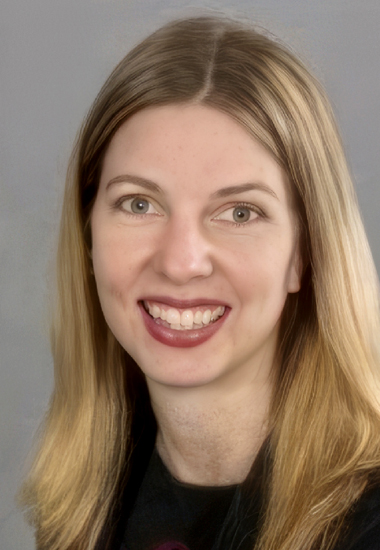
Dr. Shelley Olson
Show Notes
Resources
[00:00:00] Wright: Every year, the ADA receives more than 10,000 questions from dentists about CDT codes. These questions range from why do they change, who comes up with these codes, and who can help me?! I'm Dr. ArNelle Wright...
[00:00:13] Ioannidou: ...And I'm Dr. Effie Ioannidou. By the way, 10,000 questions are-
[00:00:16] Wright: Isn't that crazy? ...
[00:00:17] Ioannidou: a lot of questions.
That's a lot. That are a lot of questions. But here, here we are today to answer 10,000 questions.
[00:00:25] Wright: There you go.
[00:00:25] Ioannidou: No. No. We are-
[00:00:28] Wright: With a little help, of course.
[00:00:30] Ioannidou: Yeah, with a little help, but definitely we're not answering 10,000 questions. We are g- going, though, to answer the most frequently a- uh, um, asked questions and, and cover different, um, and the most important changes in 2027 to help you navigate, to help everybody navigate the CDT codes, right, with confidence.
So we are here with confidence- ... to deal with the CDT codes. So let's get started.
[00:00:57] Announcer: From the American Dental Association, this is Dental Sound Bites, created for dentists by dentists. Ready? Let's dive right into real talk on dentistry's daily wins and sticky situations.
[00:01:13] Wright: Well, hello, hello everybody. Welcome to a new season of Dental Sound Bites. We are so excited to be back with more great conversations and practical advice to support you both in and out of practice.
[00:01:28] Ioannidou: And I have to say, uh, it's so nice to hear suggestions- Yeah ... and ideas for everyone. People respond, and we are- we- I mean, we really appreciate this, and we love hearing from our audience.
So remember- Yeah ... if there is a topic you want to cover, like CDT codes, send us a message through any of the ADA social media, and we are listening. We pay attention. So we will be back. You are. Right?
[00:01:53] Wright: Yes. So, so excited, um, to jump into today's episode, and as you said, like CDT codes, this is going to be like a very rich conversation.
And to help us navigate the ins and outs of CDT codes and all things 10,000 questions, we are joined today by Dr. Shelly Olson. Welcome to Dental Sound Bites, Dr. Olson.
[00:02:15] Olson: Hi. I'm so glad to be here. This is gonna be a lot of fun.
[00:02:17] Wright: It really is.
[00:02:18] Ioannidou: Oh, we are so excited, Dr. Olson. So please- Mm-hmm ... share with us, uh, and with our listeners a little bit about yourself, the story, your work, everything you want to, to tell us.
[00:02:31] Olson: So I'm Shelly Olson. I am a small-town general dentist in Oxford, North Carolina. I've been practicing for about 20 years. I have a great daughter, a husband who's a pediatric dentist that allows me to do all the wonderful things that I do. And, um, I've just always been interested in not only patient care, but how I can make things better for dentists and for our patients.
And lately, one of the areas I've become especially involved in is dental benefits and coding. I currently chair the ADA Council on Dental Benefits programs, and I also chair the Code Maintenance Committee, which is responsible for maintaining and updating CDT code. So while coding may not sound that exciting, it is something that touches every single one of our practices almost every single day.
[00:03:14] Wright: On that point, I'm so glad that you, like, ended there because I was just gonna say how important and necessary CDT codes are to our everyday practice. And to help us just jump into today's conversation, to make sure that we're all on the same page, can you help us understand what CDT codes are? Um, what are those key things that we should understand about them?
For anybody that is, like, on the in- on the journey of their career, just walk us through, like, the bare basics of CDT codes.
[00:03:45] Olson: So at its simplest, the CDT code's really just a common language that we all use in dentistry. It's a way we standardize what we describe for our procedures and what services we provide to our patients.
We then take those same codes, put them in our clinical record, and then submit them as claims to the third-party payers, and that way we get paid. It's also used by our Health Policy Institute sometimes to look at larger health trends in oral health. And, um, I know everybody thinks it's about getting paid, but it's really about accurately documenting the care we're providing to our patients and to communicate that to the insurance companies, other members of our dental team.
And then one day if we have to pass our patients on to someone else, they can go through that CDT code instead of an entire written letter.
[00:04:27] Wright: That was a great synopsis.
[00:04:29] Ioannidou: Yeah. It, it's, it, it's, it sounds so simple, right? It does, yeah. It's like a, a, a... It's a code of communication between, I guess, right? Between colleagues, between practitioners, between, uh, practitioners and insurance.
[00:04:42] Olson: Right.
[00:04:43] Ioannidou: So it makes everything clean and standardized.
[00:04:46] Wright: Or at least it's supposed to.
[00:04:47] Olson: It's supposed to.
[00:04:49] Ioannidou: Oh, it's supposed to. And, and here is my first one of the, you know, number one of the 10,000 questions. Uh, so why do they change?
[00:04:58] Olson: Well, we change how we practice every day, right? Every year things change. Um, some things stay the same-
[00:05:04] Ioannidou: But do we really?
[00:05:05] Olson: Um, not all the time, but a lot of things stay the same. The code, a lot of the codes actually stay the same from year after year. Oh. But they do change, and they're updated, and they're reviewed every year, and they're reviewed by the Code Maintenance Committee. The Code Maintenance Committee is 19 representatives from different organizations.
We review proposals that come in. We can add to the code. We can revise the code. We can delete a code. We can, um, make things clearer. Sometimes it's just as simple as, like for this year we had implant-supported partials. Well, things really aren't supported by implants, they're retained. Mm-hmm. And so we changed the word supported to retained throughout the code to make it more reflective of what we do.
So that's part of the annual process and changes. And the really cool thing is that anybody Anybody listening, anybody out there can submit a code request for a change. It could be a dentist, it could be a dental hygienist, it could be your front desk, it could be, um, a patient. Wow. Anyone who sees a gap in the code or something that needs to be changed can submit the code to the code maintenance committee.
We take requests up until November 1st of every year, and then we do our due diligence process. And then in, usually it's March, the code maintenance committee meets. If you really are interested in the code, you can come online and watch us on, on the web and see, see how we do and how we process the code and how we make these decisions.
And then the code gets brought out a year later, so we're always a cycle behind.
[00:06:32] Wright: Oh. I was gonna ask. Okay, so for where we are right now as we're recording this, we are a cycle behind what's gonna come out in March.
[00:06:40] Olson: Right. So we've already, we've already accepted codes for 2027. Okay. Anything that's coming in now will be for CDT 2028.
[00:06:48] Wright: Amazing. You know what I love? I didn't know that we were even gonna get into the fact that anybody could submit, um, if they see a gap. Um, and so i- in the intro, we talked about those 10,000 questions, and I'm sorry to just, like, jump right in.
[00:07:02] Olson: No. Fire away.
[00:07:03] Wright: Yeah. So we talked about those 10,000 questions. So it's a combination of questions from dentists, or are the, the questions mainly from dentists and then s- the submissions are from anybody that sees that gap?
[00:07:15] Olson: So most of the questions we get come into our ADA dental code, um- mailbox. Okay. And those are processed. And most of the time those are dentists, or a lot of times they are your office manager, your front office staff, "Hey, what do I code here?" Or, "I got a denial back. What do I do with this?" And so those are the kinds of questions we get.
Also, sometimes we may get a, "Hey, we're missing this step. What do we do?" Mm. And so that takes the members of, um, CATS, which our s- our subcommittee for, um, coding within the co- within the CDT- or within the CDBP Council. Mm-hmm. And we look at those and go, "Oh, we need to figure out what we're missing here and how to revise that."
And then the ADA brings submissions, and then submissions come from outside individuals as well.
[00:07:59] Ioannidou: Let me ask you this. So do- do... First of all, do we have changes, um, or revisions, uh, annually? Do- does every year come with something new happening, or is there any year that you pause? Like, you're like, "We did it.
We're good. There's no change."
[00:08:17] Olson: That would be fabulous if that was the case, but no. We're always changing. Um, last year we had about 100 and- 102 code requests. Wow. Some years we have more, some years we have less, so.
[00:08:28] Wright: How do the codes make the cut?
[00:08:30] Olson: Um, so that group of 19- well, that group of 19, um, organizations sits down in a room.
We're in that big conference room at the ADA, and we actually, through parliamentary procedure, we go through and we look at each individual code. We do our due diligence beforehand, each group. Um, we ask questions of each other. "Okay, you wanna bring this code. Tell us more about it." And so we all sit there and have a discussion.
And sometimes what comes in as a submission isn't what comes out- Okay ... because we sit there, and it's- it's a, it's a group effort to do what's best for the patient, what's best for our member dentists, what's best for our community. And, um, sometimes we don't come to a decision, so it goes on the back burner, or sometimes things get postponed till the next year so you give everybody more time to think about them.
[00:09:16] Ioannidou: Do you ever have CDT codes that retire, you don't use them anymore? Like, give me an example.
[00:09:21] Olson: Okay. So there's a process for that, too. Someone comes in and says, "You know, I think this code needs to be deleted because it's obsolete," or, "There's another code that describes it better," or, "We just don't use it anymore."
And a good example of that is a few years ago, the CMC retired, um, D1352, preventive resin restoration in a moderate to high-risk caries patient permanent tooth. The committee felt that the nomenclature and the descriptor really didn't describe the intended intent of this. You can't really prevent active decay.
There's no other code in the CDT that tells you to what level that decay must be before you can treat a tooth. And so we decided that rather than keeping a code that didn't accurately describe the clinical situation, we retired it, and now the dentist is gonna report either a resin-based restoration or a sealant, whichever one they, in their clinical opinion, decided they did.
[00:10:10] Wright: I remember that. So you know what's so funny? Uh, I, I can be a little nerdy about coding for some reason. Um, a- and this was... I was even like this in dental school. So I used to take a class every year, and I, I still get on webinars. Sometimes some organizations offer free webinars to just give you a quick update, and I buy the books every year, like from the ADA to, um...
But I always, like, am fascinated by the... Yeah. I usually... So I'm, I'm not in my... I'm in my home office right now, um, where we're recording. But at the office, I keep them at the front desk, and sometimes I go in, and, like, there's certain books even that I think in the past are not even as affiliated with the ADA.
But I get those, and I'm like, "Okay, just a quick little reference of what was deleted." And a lot of them, you would e- be surprised. You didn't even know that these were things you can code for.
[00:10:58] Olson: Right.
[00:10:58] Wright: And I'm like, oh my gosh. It's just such a wealth of knowledge. So I think I'm so glad we're having this conversation, especially for our early career dentists out there too.
[00:11:06] Ioannidou: Oh, for sure.
[00:11:06] Wright: Yeah.
[00:11:07] Olson: It's a lot of fun. Use your resources and-
[00:11:10] Wright: Yeah ...
[00:11:10] Olson: again, the ADA actually has a great series, um, in our, um, CE courses that we did on the CDT code for, it was updates for 2026. So people can go back and reference that if they want as well.
[00:11:23] Wright: Okay.
[00:11:23] Olson: You can find them on the ADA website in our CE Bank, and again, they're available to everybody 'cause we want everybody to understand the CDT code.
But another little perk is if you're a member, you get a discount, so use those ADA discounts whi- where you can get them.
[00:11:37] Wright: That's so good to know. Okay. Well, for 2027, um, looking forward, can you walk us through, like, what updates you think are gonna have on, like, the biggest impacts on everyday clinical practice?
[00:11:49] Olson: Sure. Um, I think CDT '27 gives us lots of updates. It's mostly about clarity and specificity, making sure the codes accurately describe what we're doing.
[00:11:58] Wright: Okay.
[00:11:59] Olson: For example, the implant, um, retained versus supported. You're gonna see a lot of implant codes that have been updated and, um, we've do- done some updates on removing and repairing fixed splints.
We had it where you could place a fixed splint, but there was nowhere if you needed to remove it or you needed to repair it To code for that. Mm-hmm. We only had placement, and so we had... That was a gap in the code. Um, orthodontics came in and try- it did some revisions to clarify the way that they actually practice, so you're gonna see some ortho codes that have been revised.
And then, um, oral facial pain, they've just joined us recently, and they've brought in some new codes for nerve blocks and injection therapies for pain, for pain management. Oh. That's where we didn't have those before. So you're gonna see a whole suite of those as well. Um, you talked about things, the gap in the code, how do we, how do we get things, and so th- that's the way the CDT 2027 evolved, was a lot of gaps in the code that, that we fixed.
[00:12:54] Wright: Which is so crazy how there's so many gaps. Go ahead. Go ahead, Effie. It's so crazy.
[00:12:59] Ioannidou: No, it's interesting. We- yeah, and- and as, you know, hopefully all these are evidence-based, and I'm sure they are, and as new, uh, specialists come in, you spoke about oral, oral facial pain, I think that, you know, th- certainly codes related to oral facial pain are necessary.
But what do you think are the biggest challenges that dentists face when it comes to CDT codes? Is it that they cannot select the right code? I mean, it should be self-explanatory, right?
[00:13:26] Olson: It, it should be. I think the biggest challenge- is that we're busy. So we as a dentist-
number two, MOD, blah, blah, blah, blah, blah- and then we send it to our front desk, and we expect, we expect them to find the codes. So one of the simplest things I've found is if I go ahead and put those codes in in the back, it saves my front desk a lot of trouble. Um, so that's one thing. The other one is that a lot of times we're just reading the blurb that's in our software And it may not be the entire nomenclature or the entire descriptor.
And so you're going, "Okay, well, what do I do?" So the first thing I always tell people, go back to your CDT book.
[00:14:01] Wright: Yeah. Description
[00:14:02] Olson: Actually look at the entire nomenclature and the entire descriptor and see if that describes what you did. Um, and then if something doesn't describe what you do, don't force it.
[00:14:13] Wright: There's a point.
[00:14:14] Olson: There's always the 999 code so that you can report what you did without it.
[00:14:19] Wright: That's so good. I feel like I always learn something when we have, like, our guests on. Yeah, for sure. Gosh, this is, this is just taking me to another level, 'cause I'm thinking, I'm like, "Okay, I can do this, this, this, this, this."
This is so good.
[00:14:31] Olson: And then also, don't feel like you're alone. Yeah. Remember, you talked about those 10,000 coding questions. The ADA's there to support you and help you, and, um, I'll give you the w- the link later to be able to type in that email to email us with questions.
[00:14:44] Wright: I have a quick, uh, random question about, 'cause I know that the coding, um, like the codes can be found on the app.
Is that still a thing? 'Cause I know when you purchase the books and you purchase the, um, the companion, um, you also get access to the app too- on a quick reference. Do you ever use those in practice, like if you're in the back or something, quickly in your phone?
[00:15:05] Olson: I'm an old lady, so- Oh, you are not ... I use books.
[00:15:08] Wright: I, I, I use a book too. Me too. Me too. Hey, me too.
[00:15:11] Olson: I'm just gonna be honest. I'm gonna go back to my office, I'm gonna grab my book, and flip through those pages as fast as I can. You don't need to know everything about the codes, you just need to know your resources, just like in dental school.
[00:15:22] Wright: There you go.
Yeah.
[00:15:22] Olson: I don't need to know everything, I just need to know where to find it.
[00:15:24] Wright: I love that. Well, this can get really, really tricky when a procedure... And you kind of started to allude to this about, like, not forcing it. So can you walk us through, like, what forcing it would be, or what are some of those common mistakes, um, when, when a procedure gets a little funky and there's more, um, than one CD code- CDT code that can be applied?
What are those common mistakes that you all are seeing? Um, help us through that.
[00:15:49] Olson: Sure. One of the ones that we see sometimes is, um, night guards. There's a hard night guard, there's a soft night guard. But in your CD- in your practice software, usually it's just listed as nightguard, and then you've got two codes.
And so you've got to know which code it is that you're doing. Are you doing a hard night guard? Are you doing a soft nightguard? What if you're doing a hard soft night guard? What do you code for? At that point in time, the outer material that's actually touching the, the opposing occlusion is hard, so you would code for a hard night guard.
Um, also, you can pull out your companion. We've taken those questions. This is an awful thick book in comparison to the CDT code, and we've tried to answer some of those questions to help you with those common mistakes. Um, another one a lot of times we see is an extraction. Just because an extraction's hard doesn't mean it's surgical.
[00:16:35] Wright: Surgical. Tell them.
[00:16:36] Olson: I mean, you're sweating out there and you really want to get this out, but just because it's hard doesn't mean you pr- did a surgical extraction. So you need to go into your book and look at, did I do a full boney? Did I do a partial boney? Did I, did I take a flap? Did I suction the tooth?
Um, and then it just goes back to code for what you do. And again, if you're not sure, back to your book, or even do a nine nine nine code and write what you did.
[00:17:00] Ioannidou: Yeah, that's actually, this is a great idea because it allows- it gives you the flexibility to, to describe exactly what you're doing, right? Uh, it- it's, it's so interesting.
Mm. Everybody says code for what you do, right? So maybe your choice is nine nine nine.
[00:17:16] Wright: Mm-hmm.
[00:17:17] Olson: Right.
[00:17:17] Ioannidou: Right? We will be right back.
[00:17:20] Announcer Ad: ADA's CDT 2027 Kit supports more accurate billing, enhanced patient records, and a stronger bottom line. With sixty-seven code changes for 2027, including twenty-eight new codes and thirty-three revisions, these code changes will directly impact how your practice documents, bills, and gets reimbursed promptly.
Get your CDT 2027 kit today at adastore.org.
[00:17:51] Scientific Session Ad: Hi, I'm Dr. Mia Geisinger. As dentists, we rely on science and research to inform our clinical judgment every day. That's why continuing education must do more than instruct. It must strengthen how we practice. Join us for the ADA 2026 Scientific Session, October eighth through the tenth in Indianapolis for three days of data-driven education, collaboration, and practice-ready insight.
Learn more at ada.org/scisession
[00:18:26] Wright: Welcome back to Dental Sound Bites. Today, we're talking about the most frequently asked questions about CDT codes, and we're covering key changes that are coming in 2027 with Dr. Shelly Olson.
[00:18:39] Ioannidou: Because obviously coding, uh, and the CDT selection is connected to the, uh, claim reimbursement. So what do you think is the best approach there?
And, and a lot of people will say, "Okay, so I selected the right code. I did what... You know, I coded for what I did, but then my claim is re- the claim, not my claim, but the claim is rejected." So what's the, uh, response to this? What, what are we missing here?
[00:19:04] Olson: So sometimes your claim is denied not because you didn't submit the right codes, but because the, um, insurance company has a whole different set of rules that they're playing by.
They, they've set up what they are gonna pay for, and what they're gonna pay for may not reflect what you did. So let's say that they have, they don't pay for core build-ups. That's just part of the policies, procedure the employee ha- employer has selected. And so even if you file for a core build-up, they're going to deny it, not because you didn't need to do a core build-up, not because it wasn't the right thing to do, but because it's just not an included benefit in that benefit plan. And so the first thing you wanna do at that point in time is call the m- call the be- insurance company and ask, "Is this a limit- a benefit limitation, an exclusion, a frequent li- limitation?"
Sometimes it's on your EOB. If it's not, again, reach out to the ADA. We can help answer those questions. We can- There you go ... we can look at that EOB. Yeah. We can provide feedback for you. The biggest thing is just to make sure you have all the right documentation, uh, file an appeal if needed, and that your accurate coding and your accurate documentation's what's gonna help you successfully get that claim paid if it's an included benefit in that patient's policy.
Don't think it's something you did wrong.
[00:20:25] Wright: So good. You, so you led right into my question about reaching out to the ADA if you have, like, a coding-related question. So I have two questions, and, and one of them is gonna be my coding-related question. I'm gonna take a point- Okay ... of personal privilege on the podcast-
[00:20:41] Olson: I'll do my best.
[00:20:41] Wright: While we have the expert, expert here. So, um, so you said they can reach out to the ADA. Can you tell us really quickly what resources are available if a dentist should reach out with a coding-related question? And then I wanna ask my coding-related question, which is, it's not a hard question. You- you- you're gonna be able to get it.
[00:20:58] Olson: So first of all, you've got your CDT manual. Start there. Then go to your CDT Coding Companion. We also have the ADA Glossary of Terms, which is on the ADA website.
And, um, that's, go through there. There's also an entire webpage, uh, with CDT coding questions, so you can go to there. And then if your information's not on any of those sites, or you just say, "You know what? Enough of this. I've looked far enough, and I can't find it," um, you can email the ADA coding staff, um, through the Member Service Center by emailing dentalcode@ada.org. Again, that's dentalcode@ada.org.
[00:21:35] Wright: And we'll link everything into the show notes. But my, my coding-related question personally is, um, so we've talked a little about, a, a lot about, um, insurance actually.
And so for anyone who... And I don't know, this might be a dumb question, but I'm still gonna ask it. So what if you are not in-network with insurance and you, you don't bill insurance? Like, does this coding thing even matter? Do you even need to take coding into consideration if you're not billing it to a, a payer to be reimbursed?
[00:22:02] Olson: Um, I think it's very important to still use the code because it's your own personal record even. Mm-hmm. It's a record of what you did. And so even though you write all your notes out, this gives you a clear, concise, you can go back in the patient's record and see what date, what you did, and it pairs to that.
Also, if you are having to transfer that patient, you retire, the patient moves, you can transfer the patient's record a lot easier with codes than versus an entire written 40-page chart
[00:22:32] Wright: Okay. That was good. I mean, I, I, I knew the answer, but I just wanted for anybody who's listening to be like, "Ah, this doesn't apply to me because I'm not even in-network with insurance anyway.
Why? The- whatever. Skip, skip." You know, I just wanted you to, you know, make it clear for us all.
[00:22:46] Olson: And even if you're not in-network, you still want to be able to, as a courtesy, be able to file those for your patient or give your patient a walk-out statement so they can file it themselves. True. If you don't use that code, they can't get reimbursed for what treatment you did.
[00:22:58] Wright: There you go. That was so good. Thank you. See, I knew you would get it.
[00:23:02] Ioannidou: In other words, it's, it's a good, it's a good, um, uh, habit to have for, uh, record-keeping, right? It's a, a good quality of record keeping if you use the, the code there as they do in medicine.
[00:23:13] Wright: Quick question for you. Like, what are the top, or maybe like the top five-
[00:23:18] Ioannidou: Thousand
[00:23:18] Wright: most common questions-
[00:23:19] Ioannidou: The top 5,000.
[00:23:19] Wright: I know. Of the 10,000. Like, most common questions that you're getting from dentists, um, that you think would help our listening audience.
[00:23:29] Olson: Um, so we get quite a few a lot of times about what do, what documentation do I need to provide when I do scaling and root planing.
And so we, we get that a lot. Okay, for scaling and root planing, you want to provide, uh, extra- diagnostic X-rays, probing depths, um, and then make sure that you can... Even if it's you've done the right number of teeth, make sure the number of teeth that you've asked for are the, are the right number of teeth.
If you've scaled, you know, one to three teeth, there's a code for that. There's also s- a code for four or more. Make sure, make sure you're coding for what you do.
[00:24:04] Ioannidou: 4341, baby.
[00:24:06] Olson: There you go.
[00:24:07] Wright: Yeah.
[00:24:08] Ioannidou: I know this code very well.
[00:24:10] Wright: Yes. Our periodontist here.
[00:24:12] Olson: Yeah. We get questions about that. We get, um... We sometimes get questions about...
A lot of times we get, "Why was my, why was my claim denied?" To be honest. Hmm. "Why was my claim denied?"
[00:24:23] Wright: How do you navigate those? Do you ask for more, like, information, or do you help with that?
[00:24:28] Olson: Yeah. We usually ask for the EOB.
[00:24:29] Wright: Okay.
[00:24:30] Olson: And then we try to help with was this a, um, was it just part of the patient's plan? This is, this is plan design. This is, this is what it is. Or is there some hiccup in the system? We got some recently, I think, um, that we had issues with. There was a actual, a problem within the third-party payer's computer system. They were routing something the wrong way, and we got enough of those codes that we were able to say, "Hey, can you help us?"
And the third-party payer said, "Oh, there's a glitch here." And they've gone back and fixed that.
[00:25:03] Wright: Nice. Okay.
[00:25:04] Olson: So reaching out to the ADA does benefit not only you, but it benefits everybody else because if we find that something is happening on a larger scale, we can go talk to the third-party payers about it, or we can say, "You know, we're really missing a code here. We- some- something's missing." And so that, that helps us with that.
[00:25:23] Wright: Hmm. That's really tricky, right? And, and you guys have to forgive me for this question, but it's really tricky from, like, an, an insurance perspective because so of the 19 organizations that are inside of the room helping you, uh, I guess, kind of make some of these decisions, some of it has to be some of the third-party payers, I would assume.
Because, for instance, like, you have to have those relationships in order to be able to call or say phone a friend and be like, "Hey, um, your system is acting up," right? Right. And I bet that's a little bit tricky for the dental community at large for people who are, like, on one side or the other of the coin, right?
Or no?
[00:25:58] Olson: Um, I think it could be confusing for people to understand why we, um, interact with our third-party payers. Mm. We are trying to make sure that we're making this better for everybody.
[00:26:08] Wright: Okay.
[00:26:08] Olson: We want to make it easier for our member dentists to be able to get their questions asked, but also, if we don't include third-party payers in the code maintenance process- We can create all the codes we want, but if they don't make sense in how we're giving them the information, then they're may not pay the codes.
Mm. So we, we need to be part of a process that works together so that we get what's best for everybody.
[00:26:33] Wright: That's really good to, to know. I think that can help, like, a lot of people with, with some of those questions that loom around online. You know what I mean?
[00:26:40] Olson: Yeah, and that, that's ... I always tell people, "Don't be afraid to pick up the phone and call the third party payer.
It may sound scary, and if you don't get anywhere, let us help." But they- I think a lot of the third party payers are trying to be more, um, upfront and more transparent with the policies that they're doing. And so the more we ask, the more transparent to- for them to be transparent, the more they're gonna be held accountable.
So we just need to keep asking.
[00:27:09] Ioannidou: Yeah. That, that's absolutely right.
[00:27:12] Olson: All right.
[00:27:13] Ioannidou: Can I ask a, a, a, a silly question? I, I, I really ... I mean, the, the work that the committee does is so important, and, um, it- do you get any weird, unusual questions for, uh, your requests that are funny to, or interesting to share with us?
[00:27:29] Olson: I'm trying to think, 'cause a lot of times those, a lot of times those don't come directly to me. They go, they come to our ADA staff, and so-
[00:27:36] Ioannidou: Oh, so they select. They clean up.
[00:27:39] Olson: They clean up. They don- they, they, they, they, they, they take care of it. Our- I will have to tell you, our ADA team, if anybody listening doesn't know, they are absolutely fabulous.
They are some of the hardest working people you will ever meet. They're brilliant, they're smart. Use them. They are, they're an amazing resource, um- But no, we really don't get, at least they don't bubble up to me, the crazy questions.
[00:28:03] Ioannidou: Yeah. So I, I- another thing that I'm thinking about is, uh, you know, obviously there's, there is this interaction with the ADA membership and the ADA community.
I wonder to what extent and when we will, um, utilize, uh, modern technology and artificial intelligence resources- Yeah ... to perhaps, uh, become more creative in the way we structure the CDT codes. Uh, a- and again, I'm just, that's, that's a curiosity, uh, driven question. I don't have any suspicion or any answers, but I bet we can, we can improve our, um, our nom- nomenclature so much more utilizing AI, right?
[00:28:44] Olson: I would think so. You know, we've not really branched out into that. Um, it would be interesting to sit there and run it- ru- run a section through ChatGPT and see what it has to say.
[00:28:54] Wright: Yeah.
[00:28:54] Ioannidou: Yeah. I'm sure they would say a lot of wisdom, and, and make you, sometimes they make us feel like, "Wait, darn it, I thought I can speak or write well."
"What happened?" But anyway, is there ... I mean, we are, we are so excited, but is there anything that you think that we haven't covered and you would like to bring up?
[00:29:12] Olson: Um, the biggest thing is I want to make sure that you all know that you can be part of the process, part of helping with the CDT code, the maintenance, the evolution of it.
Also, so that you know where to find. We've talked about the newest version of CDT coming out. It's CDT 2027. It's gonna be available September 2026. I think you can go ahead and put your pre-orders in now- Mm-hmm ... um, on the ADA website. It is available to everybody, but a perk for being a member is you do get a little bit of a discount, so that's a great thing.
Um, for those of you who like books like myself, you can get it in the paper version. For those of you who prefer your material to come to your cell phone, you can get the e-version as well. And, um, then we talked a little bit about the process, about how to be part of the code maintenance process. The code maintenance committee is actually taking, um, in applications right now for new codes, for deleted codes, for changes in the codes, and you can find those resources if you search ADA Code Maintenance Committee.
We take those, I believe, up until November 1st, and then everyone does their due diligence, and then the meeting is in March this year. Again, all of that can be found on the ADA's website. And then if you just have more questions, more curiosity about the codes, you can go to ada.org/ndt, and that's gonna give you all the resources you need to be able to feel confident and code with confidence.
[00:30:41] Wright: I'm so glad you mentioned that. I love it. Oh my gosh.
[00:30:44] Ioannidou: Code with confidence. Yay.
[00:30:46] Wright: That's an actual book. Do, did you ever refer to it or use it by chance?
[00:30:50] Olson: I did not. I've always gone to the CDT codes, so, um- I was just wondering ... just because it's got everything you need in there.
[00:30:57] Wright: Mm-hmm, there you go.
[00:30:58] Ioannidou: Gonna make a T-shirt out of it.
Code with confidence.
[00:31:03] Wright: I mean, I use this information every single day, and I'm, I'm, I'm gonna be listening to it again. Um, I was gonna say really quickly, I think one of the things that trips people up is that it's, it's a practice management thing, and we as dentists, we usually are trying not to be involved in that process 'cause somebody else is handling it for us.
Um, but I think it's really good to know that we do have you all as resources that we can reach out to. So thanks for kind of like tying that all together.
[00:31:29] Olson: Yeah. Remember, you joined Organized Dentistry 'cause you didn't wanna practice alone.
[00:31:33] Wright: Yeah.
[00:31:34] Olson: You're not practicing alone. You've got, you've got a ton of members and a ton of support right there with you just because you're an ADA member.
[00:31:41] Wright: I'm really- I'm g- I'm coming in March. I'm gonna watch the process.
[00:31:44] Olson: It's, it's, it's an unbelievable process. It really is. I mean, the first time I sat in that room, I went, "Whoa, what's going on here?"
[00:31:51] Wright: I bet there's a bunch of geniuses all sitting around the table, and, and, and- Oh ... this is what I was thinking. I was like, what about the person-
[00:31:56] Olson: No, we're not. We're just normal people.
[00:31:58] Wright: Well, no, but what about the people who haven't been practicing for very long, and you're like, "Where do I get the context and the perspective to even contribute to this conversation?" But I think once you just dip your toe in, then you, like, if you like it, then you can just be hooked on...
Right?
[00:32:13] Olson: Yeah. And with the third-party payers, the big thing with the- Third-party payers and also each of the specialty organizations have a seat. Oh. And usually they, they, so they have a vote. Each spec- each ADA-recognized specialty has a vote and a voice, and then they usually have a backup that they're training to be able to learn as they go.
So there is some succession planning within, and- Oh ... um, we have just different representatives, and so they're there. It's, it's pretty collegial. And, um, the ADA has five seats on the CMC, and so we get to learn as we go. So when you're coming on as a new council member, you're doing the work, you're lear- doing the learning process.
You may be put on the floor to vote. But there's also eight of us that are on CATs, so that you've got some learning, learning runway. You're not just thrown to the wolves.
[00:33:01] Wright: What's CAT? What's CAT?
[00:33:02] Olson: It's the, um, it's basically the code, the coding part of the, um, Council on Dental Benefit, Dental Benefits Programs.
[00:33:08] Wright: Oh, okay, okay, okay.
[00:33:09] Olson: Okay. It's, it's our s- it's our subcommittee.
[00:33:11] Wright: Oh, okay. Gotcha, gotcha, gotcha. Okay, cool.
[00:33:14] Ioannidou: That's great.
[00:33:17] Announcer: On the next Dental Sound Bites.
[00:33:19] Wright: We are gonna be talking about how to build a career that stays relevant, fulfilling, and financially successful over the years.
[00:33:28] Klingensmith: I've seen a lot of new dentists make mistakes at the beginning.
My contract was a yearly contract, so I only had one specific time I could get out of it every year. Now, that's a red flag. It's like- That's a red flag. Yes, don't sign that. Yeah, so that's, that's interesting. I have the five good habits to start to create in your first five years.
[00:33:58] Ioannidou: It was so nice, Dr. Olson, having the chance to- So good ... to be talking to you and sharing all this unbelievably important information, right?
[00:34:08] Wright: Yeah.
[00:34:08] Olson: I appreciate y'all giving me the time, the forum, to, to talk about something that a lot of people don't talk about. They, they just think it's a necessary evil.
[00:34:15] Ioannidou: Yeah, and it's- I think it's intimidating too because a lot of people don't understand how this is structured, and I think it's very important for us to have these conversations to bring transparency into the process and so people understand and they are empowered to ask the questions.
[00:34:29] Olson: Well, I think even more so than being empowered to ask the questions, be empowered to be part of the solution.
[00:34:35] Ioannidou: The process. Yeah. Yeah. Yeah, yeah, yeah. Yeah.
[00:34:37] Olson: That's one of these wonderful things about the code maintenance process, is anyone can be part of the process. You're the ones who are using these codes every day.
[00:34:45] Wright: Every day, yeah. Love that.
[00:34:46] Olson: It's, it's your, it's your experience. Let us know what can make this better, what can make it easier for you, because no one wants this to be hard.
[00:34:56] Ioannidou: And what a nice way to close this conversation. This is exactly the right, the, the, the right concluding statement. You're absolutely right. This is, uh, this is great. Uh, thank you so much. This is amazing.
[00:35:08] Wright: Thanks so much for being on the show today, Dr. Olson. It was really, really good getting all of your wisdom and just learning the ins and outs of, uh, the Code Maintenance Committee and CDBP, Council on Dental Benefits.
[00:35:20] Olson: No problem. Remember, come and watch us in March. Watch the process happen.
[00:35:24] Wright: I wanna do that. I think I'm gonna take you up on that, so if you see me, make sure you say hi. I'm gonna, I'm gonna be expecting my shout-out.
[00:35:30] Olson: I'll just wave at you.
[00:35:33] Wright: Well, just a reminder for everybody, uh, that's listening, we will have all of the resources and information mentioned in this episode.
They will be linked in the show notes on ada.org/podcast.
[00:35:50] Ioannidou: And again, if you know someone who knows someone who knows someone who could use this information in this episode, please share it. Share the- Share it ... episode. Share it with them, with all these series of them.
[00:36:02] Wright: Yes. And you can also follow us on all ADA social channels. Hit Subscribe wherever you listen so that you never miss an episode. You can also rate this episode or write a review. As you all know, it helps many more people find our show. Bye, Dr. Olson.
[00:36:19] Olson: Bye, ladies. Thank you.
[00:36:21] Ioannidou: Bye.
[00:36:23] Announcer: Thank you for joining us. Dental Sound Bites is an American Dental Association podcast. You can also find this show, resources, and more on the ADA member app and online at ada.org/podcast.
The views and opinions expressed in this program are those of the speakers and do not necessarily reflect the views or positions of the American Dental Association.