






You can also listen on the ADA Member App.
Leading, Listening, & Looking Ahead.
Description: We’re talking with new ADA President Dr. Thomas Paumier about leadership, mentorship, optimism, and the vision helping move dentistry forward.
Featured Guest: Dr. Thomas Paumier
“The golden age of dentistry is always in front of us. I believe that.” — Dr. Thomas Paumier
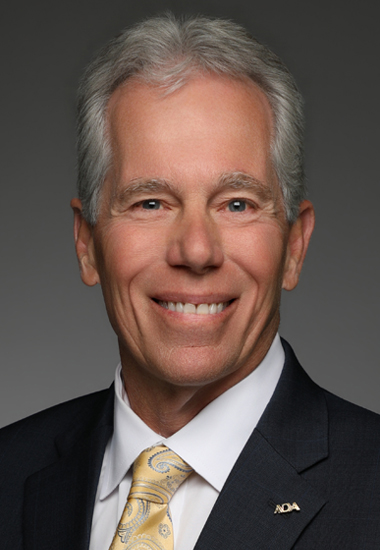
Dr. Thomas Paumier
Show Notes
Resources
[00:00:00] Wright: Today's episode is a very special one. I'm so excited, Effie. Today we're joined by the new president of the American Dental Association, Dr. Tom Paumier.
[00:00:10] Ioannidou: Woo-hoo.
[00:00:10] Wright: I know. Dr. Paumier is a leader shaping the future of the profession in rapid times of change and opportunity. I'm Dr. ArNelle Wright.
[00:00:20] Ioannidou: And I'm Dr. Effie Ioannidou, and you know what a guest today. We are going to be learning so many things about, uh, the issues, the priorities impacting all of us, our community today, and, and, and the vision that is helping drive dentistry. So I'm so much looking forward. This is a a conversation that nobody wants to miss.
[00:00:44] Wright: Pay attention, everybody.
[00:00:45] Ioannidou: Pay attention, people.
[00:00:49] Announcer: From the American Dental Association, this is Dental Sound Bites, created for dentists by dentists. Ready? Let's dive right into real talk on dentistry's daily wins and sticky situations.
[00:01:06] Wright: Hello, hello, everyone. Today we are so excited for a very special guest that we have on the show today.
[00:01:13] Ioannidou: Yes. Our guest today is Dr. Tom Paumier. So let's get right into it. Welcome, welcome, Tom. Uh, we are all doctors, so you don't mind if we call you Tom, right?
[00:01:26] Paumier: Please.
[00:01:26] Ioannidou: We are so happy to have you with us.
[00:01:28] Wright: Hello.
[00:01:29] Paumier: It's my pleasure. I've been looking forward to this, because I've seen many of the podcasts of past presidents, and so it's a privilege and a pleasure to be with you both, uh, ArNelle and Effie.
[00:01:39] Ioannidou: We're excited.
[00:01:40] Wright: Thank you. Well, we can jump right on in. Um, can you please tell all of our listeners a little bit about yourself and the journey that led you here?
[00:01:48] Paumier: Sure. I'm a general dentist in private practice as a solo practitioner for, I'm in my 39th year of practice and, uh- I'm a graduate from The Ohio State University, uh-
[00:01:59] Ioannidou: The Ohio ...
[00:02:00] Paumier: 1987. Yeah, it wasn't “the” when I was there, but I have to say it that way now, and Dr. Rosado hates when I do that, but I, I have to throw it in, uh, all the time.
Um, I did a general practice residency at a community hospital in Youngstown, Ohio. I'm from Canton, Ohio. I returned home in 1988, um, to where I grew up in Canton, Ohio, and I hung out a shingle and started my practice as, uh, basically sharing office space with a dentist for two years, bought a practice of a dentist who passed very suddenly, uh, and then bought a second practice.
And, and literally just over the last, uh, six months, merged my practice with two, um, good friends who are dentists two blocks from where I am, and now we practice together, uh, the three of us. And, uh, so it's been a wonderful, uh, ride and journey, uh, for my clinical practice.
[00:02:52] Wright: That's amazing. What a story. I feel like there's so many nuggets in there, um, that I can pull out for my own self.
[00:02:59] Ioannidou: Oh, for sure.
[00:03:00] Wright: Personal privilege.
[00:03:01] Ioannidou: I have a question. So tell us how, how did the organized dentistry leadership, uh, come up and how did you... Uh, because you, I'm sure you, you felt like, "Okay, I have a lot of free time." "How about I become the president?"
[00:03:17] Wright: I know.
[00:03:18] Paumier: Well, I, I always believe, as Woody Hayes said, "You have to pay it forward."
Um, and so, uh, I think we all have a responsibility to give back to our profession in some manner or another. Some do it through, you know, service, uh, by going on mission trips. Uh, what I chose was education and organized dentistry. Um, uh, I'm an assistant clinical professor at, uh, Case, uh, Western Reserve University School of Dentistry, uh, and I teach in a general practice residency program at Cleveland Clinic Mercy Hospital, uh, for the last 20 years, a residency program that I helped, uh, start.
And so, uh, and I've always been involved in organized dentistry as well, starting at, like most leaders, at the component level, and then, uh, doing things at the state level, and then, uh, uh, now at the national level. So I think my journey is typical of those who have served. And, uh, uh, in the leadership courses that I teach at, at Case to the dental students, I always say, "I never sought any position that I had. Uh, they just kind of presented themselves, and I was willing to say yes, uh, when asked to serve."
[00:04:29] Wright: Oh, I love that.
[00:04:30] Ioannidou: Yeah. That's right. A lot of people ask about these transitions, and I think it's a very key thing for, especially for early career dentists to understand, that it's not like one day you wake, wake up and you are elected as a, you know, president or president-elect.
But, uh, it- it's- it's such a long process and so many opportunities to serve. So I'm- I'm glad that you pointed this out. But I want to, um, I want to, uh, stay a little bit more now in the... You- you reached a high level, a national level leadership position that is very significant. And so tell us a little bit about your transition from being the president-elect and a little bit more observant to being the, the, the president from The Ohio. Um- That's the ... so how, how has this been and, and, uh, what, uh, what do you think would be your first order of business?
[00:05:26] Paumier: Well, you know, it, it's the transition as occurs, I expect to be seamless, and that is a credit to Dr. Rosado's leadership, uh, his culture of listening that, um, he's instilled in the board and as he travels throughout, uh, the country, as well as the cohesiveness of the board right now.
Um, and then the commitment of Dr. Nadershahi, the new Executive Director, as well as the professional staff. So, uh, Rich and I have been very, very aligned in our vision and our mission, and people have always said, "Well, what was your platform? What did you get elected on?" You know, "What did you want to do?"
Wright: Right.
Paumier: And I said, "All I wanted to do is leave our profession better after I've served than I found it." And that was Rich's mission as well. I don't have a personal platform. There's nothing that I want to accomplish beyond helping our profession and helping our dentists with the challenges that they face, as well as what our profession faces every day.
[00:06:23] Wright: Oh, that's so good. Um, great segue into a question that I have that just came into my mind as we've been having this conversation about you being the president-elect and, you know, your vision for the presidential year. Um, I'm sure, I'm sure you hear a lot of, uh, talk about market share and how, you know, membership has declined over the years, and maybe we'll get into a little bit more of that as it relates to organized dentistry.
But, um, I want you to share a little bit of your vision for your presidential year, your hopes for the future of the profession, and how, um, you know, maybe just speak to early career dentists, those that don't even see the ADA as their first choice. I think hearing, you know, some of your vision and, you know, how organized dentistry has shaped your career, um, to, to even getting you to this level would be really good to share, um, right now.
[00:07:19] Paumier: Sure. Boy, there's, there's so much I can go with that, ArNell.
Wright: I know.
Paumier: I'm, I'm gonna start with something that you mentioned first and you said we might get to it later, and that is membership market share. Um, because I refuse to accept that our membership market share, which has been declining over the last 20 years in general, as has almost every membership organization, whether it's professional or otherwise.
Um, it is a false barometer of the value of what the ADA and organized dentistry does for individual dentists and their practices as well as the profession. Um, simply because people does- do not join in the m- in the manner that they used to in the past, um, does not mean that the value that the ADA and organized dentistry brings is not what it should be.
It doesn't mean that we don't have room for improvement also. Um, but I, I don't like that almost false equivalency, that that's the barometer of our success because it isn't, and I hope to be able to explain why. So when, when I look at what the vision is and how we can demonstrate a value proposition for especially young and early career dentists, I look to some of the things that I consider as my core pillars for what the future of the ADA should be.
And I say this, um, so often that we can do anything we want But we can't do everything we want. And so that means that we have to prioritize. We have to decide what is the most important things we can do. And for the ADA, we have to decide also what are the things that only the ADA can do and no one else can do.
[00:08:58] Wright: Yeah.
[00:08:59] Paumier: And for me, those things are advocacy, science and research, standards and testing, and then practice support, how we pract- how we support our members in their everyday practices. So those are the core values that I consider to be the ADA's foundational pillars in which we are the best at and the only one who can do those things.
So if we can't be best in class, best in price, and best in service, then get out. Don't do it. Partner with those who are doing those things best in class, best in price, and best in service, and hopefully that's our states and components that can meet the needs of our members. And then if not, industry partners or others in the marketplace who we can partner with to do those things.
So that's my kind of big picture philosophy, and then if we wanna get into a little more detail, I can, I can, to me demonstrate how some of those things bring value not only to the profession, but to each of us individually in our practices every day.
[00:10:02] Wright: I know you wanna speak to, um, your vision and like hopes for the future of the profession, and, and we can.
I wanted to ask just if I can double-click on something that you said.
Paumier: Sure.
Wright: Um, just, uh, maybe like about your journey in becoming president-elect for the ADA. Um, did you see some of these challenges in some of like the talks about market share, and that, that was one of the things that you were like, "You know what? I kinda wanna help change that." 'Cause I love the description that you just gave. I don't think I've heard it said that way, um, so far, and so that's really good. Maybe, maybe, I don't know if you can talk about that a little bit.
[00:10:37] Paumier: Sure. Well, as, as many of our members know, there have been some challenges in the ADA past going in a direction that maybe some felt certainly wasn't, um, the right way, and at the time looked like it had a lot of opportunities present.
And unfortunately, a lot of money was spent, and the outcomes weren't what were hoped for. And we're course-correcting with a lot of that, and when I saw that, as, as most know, my pathway to the ADA president-elect and now president was different than most because I did not serve for four years as a board of trustee member.
I was elected from the House of Delegates from the floor. Uh-huh ... and, um, the first time that's happened in the history of our association. Because I think a lot of us felt that, um, we weren't seeing the things that we wanted to see, we weren't demonstrating the value that we wanted to have, even though a lot of the things we've always done were still being done, but we drifted, I think, off into this other path.
And so I felt there were things that I could do that, that hopefully would make things better. It was as simple as that.
[00:11:42] Wright: So good.
[00:11:43] Ioannidou: So from the people, for the people.
[00:11:46] Paumier: I, I hope.
[00:11:48] Ioannidou: I love this.
[00:11:49] Paumier: And, and I'm, I'm humbled that my colleagues felt me worthy to, uh, you know, sit in, in this chair, if you will.
[00:11:55] Wright: Yeah.
[00:11:55] Ioannidou: Oh, for for sure.
It's, it's really, uh, it's a humbling experience. The, the moment that you learn that you are elected, I think it is a humbling experience. Uh, you know, you, uh, you speak so wisely, and I want to tap into, uh, the way that you see our profession today. You have been practicing for quite some time. Uh, so what do you think the biggest challenges are, and- I, from your attitude, uh, and behavior here on, on, uh, we just met, so I, I, I, I receive an optimism.
So I want to understand, um, what are you more, um, most optimistic about and what are, what are the things that make you, you know, smile and, and, and feel good about the future?
[00:12:40] Paumier: Well, I, I, I have amazing optimism. As, as an officer of the American Dental Association, you have the privilege and honor to speak at a lot of white coat ceremonies as well as, uh, commencements and convocations for our dental schools.
And one, teaching in the dental school, teaching the residents, um, uh, their optimism and their intelligence, the things they know, the questions they ask, um, I, I just, I know our future is, is bright, uh, because of who is coming into our profession. So that's the first thing. It's the who, it's the people who are in dental school right now, and those are our future leaders.
And, and that's the biggest reason for my optimism. But beyond that, um, I had some students the other day say, "Gosh, you know, I feel like maybe our, um, clinical experiences aren't what maybe my generation's clinical experiences were in the past. I'm not doing as many extractions or root canals or crown preps as maybe I did when I graduated."
Um, and I, I said to them, "That may be true, but think about this also. When I went to dental school, I never learned how to place a posterior composite. I never learned how to, uh, surgically place a root form implant and restore it." Um, and so I had to learn those things on my own after dental school-
Ioannidou: Yeah
Paumier: even though maybe I learned a lot of other things. But you as a student today have a such much broader scope of things that you're going to be able to do in your practices for the next 30 years, and the message is you will have to be a lifelong learner. Um, and you have YouTube and access to every possible way to get, uh, information related to those types of procedures that you wanna learn, and you'll get the experience.
We all do. Uh, we never felt we were as prepared as we wanted to be when we left dental school, but we all get the experience as we need it. And so that future is bright because their opportunities are boundless and endless. And I look at salivary diagnostics and the research that's happening at the ADA Forsyth Institute related to the oral microbiome, um, and the ability to have personalized healthcare in dentistry and medicine, and the fact that, uh, dentists of the future, and not that distant future, will be able to maybe screen for and diagnose chronic illnesses and cancers before our primary care physician colleagues can.
And that through the regenerative, uh, uh, research that's being done, that maybe we can regrow teeth. You know, we know we can, can regrow dentin and cementum, but can- how do we get to enamel? But how, how do we do those things? So if you can imagine it, I think we can research it at some point and be able to do it.
So the opportunities are boundless for our, our, our future colleagues, and that's what gives me, uh, great optimism for our profession.
[00:15:36] Wright: So good.
[00:15:37] Ioannidou: Oh, I mean, I share the optimism. I know that, oh, as, as long as we stay on the discovery and research, uh, mindset, uh, which, you know, sometimes could be challenged- As long as we stay there clear, uh, then you, you're absolutely right.
Uh, I mean, I'm also extremely optimistic. Our, uh, uh, schools are doing great job. Our, uh, we equip, uh, uh, our students with great knowledge and, and skills. So yeah, we should be proud and optimistic.
[00:16:08] Wright: Yeah. Well, hearing all of this, it kinda keeps me all stirred up because I hear some of the chatter from early career dentists all around, like when I'm at conferences and things like that.
And so one of the things you said, Dr. Paumier, is that you get to travel and you get to meet all kinds of dentists from just different career stages, like different practice modalities. Um, and, and as you engage with them, can you share with us like some of the most common questions that they're asking you, those concerns that are at the top of their mind?
Um, and maybe, maybe this will keep them all optimistic about their, their career in dentistry too.
[00:16:45] Paumier: A- a- absolutely. And it, it goes back to, you know, a little bit of what are the headwinds? So we talk about the optimism, but there's a lot of challenges that are in front of us as a profession and as the ADA.
And those headwinds and the things that we, I hear the most, not just from travel, but on message boards and, uh, from all dentists, members and non-members, and it's related mostly to two primary issues, uh, insurance issues and workforce issues, stagnant insurance reimbursements, um, and increasing overhead, uh, and costs, and then workforce, you know, not enough qualified, uh, auxiliary personnel, hygienist assistants, front desk, whatever it might be.
So those are the biggest, um, uh, kinda headwinds that we all face as a profession, and it doesn't really matter the practice model. But relative to the questions that are asked the most, um, I, I think that, that it does vary. From, from students, um, you know, what I hear is, gosh, what we talked about a little bit earlier, their educational experience maybe doesn't, uh, give them as many clinical repetitions as they'd like, and obviously the debt that they have coming out of school.
Those are the biggest issues that I hear from students. Um, from early career dentists, um, it's about mentoring, um, and gaining that clinical experience and then deciding what's the right career path from them. Should I be an employed dentist or an associate or start my own practice or work for an FQHC or, you know, uh, the federal, uh, services?
What, what are those things? And then the other biggest challenge I think they have that they communicate is about learning, um, a business, about how to become a practice owner because even though you may get it in dental school, uh, you're not ready to apply it, so you didn't learn it
Wright: Right
Paumier: ... even though, you know, they might be teaching it to meet the code of credit standards.
And all that, I also is framed around one big principle of ethics that I hear sometimes, "Gosh, I feel like sometimes I'm forced to, um, you know, uh, uh, do things that maybe, um, I wouldn't otherwise do to, to because of income-related types of problems." And I hate that young dentists or any dentist might be faced, and our patients might be faced, with those challenges, uh, related to treatment planning, um, simply because the pressures of running a business and, and making ends meet are there.
And so I think with early career dentists, um, those are the biggest challenges. Mid-career, I would say oftentimes is about declining income. "Gosh, I've been doing this for quite a while, but my income's stagnant because the insurance reimbursements are stagnant, my o- office overhead's going up, as well as, gosh, I can't find a hygienist.
You know, I have all these patients who wanna get in, but, you know, I, I can't find another hygienist." Um, uh, and then for late career dentists like myself, I think it's, you know, how do I transition my practice? Uh, because so many young dentists, you know, aren't necessarily in the marketplace to buy a practice at, at their early stage of their career.
And then, you know, I don't wanna just stop dentistry. What do I do? Can I get into education or service and other things? So, um, you know, through the spectrum, those are the things that I've been hearing.
[00:19:59] Wright: And that's a lot.
[00:20:00] Ioannidou: I mean, these are, and scary. Some of them are scary.
[00:20:04] Paumier: Yeah. Yeah. Yeah, it really is.
[00:20:05] Wright: It's a lot.
[00:20:06] Paumier: But there's answers to every one of those. You know, I don't e- e- the, the challenges, um, uh, change, but I think every generation says, "Oh my gosh, I wish I had it the way the past generation was. That was the golden age of dentistry." The golden age of dentistry is always in front of us. I believe that.
[00:20:22] Wright: Oh, I love that.
[00:20:23] Ioannidou: I think you're absolutely right. I agree because technologically, uh, uh, we are, um, you know, advancing so fast. And I'm not talking only about AI. Right. Forget AI for a minute, but I'm talking about, uh, you, you you mentioned the salivary diagnostics. I mean, there are so many opportunities for the oral cavity to just, as we say in the ADA, right, to put the mouth back in the body.
So we... And we are trying to do this. However, a- in, uh, in, in the list of challenges that you mention, and I recognize all of them, I would say that the, uh, this unfortunate debt, the student loans, that's something that I, I, I find as I read more and I try to understand it and as someone that works in education, I mean, we, we do nothing to improve it.
Actually, it's getting only worse.
[00:21:12] Paumier: It's a big challenge. And, and, you know, unfortunately, the marketplace, uh, kinda is what controls it more so. Everyone says, "Why can't the ADA stop tuitions from rising? Um, why can't the ADA stop new schools from opening and producing, you know, more dentists, um, with more debt," you know, and all those things.
And, and, you know, we can influence things, but we can't always control them, and so there are challenges. And, and, but I still say that dentistry is absolutely by far the best healthcare profession that any young person could pick for a bright future, even with the debt that's there. The ability to pay it back, the ability to make the practice life that you want, whether as an employee or as an associate or as an owner and an entrepreneur and a business person, is in front of you.
That's not necessarily the case in medicine. It certainly isn't in pharmacy, um, and, and all other healthcare areas. So we are still that cottage industry. And, and the data coming out of Marko's group at HPI demonstrates exactly that, that practice ownership, we thought was going to become kind of passe, that most dentists wanted to be employees their entire lives.
Well, what we're finding is not that, that dentists are just delaying practice ownership. They're being, uh, employees or other models of practice for five to seven to 10 years, and then- they're starting into their own practice. And so that gives me great hope that what our, I think our patients really enjoy in that very personalized practice model, um, uh, of, of what I lived my entire life as a solo practice dentist is still going to be available to them, and it's gonna be available to young dentists as well.
[00:22:56] Ioannidou: And we have an exhibit A here with us today, ArNelle. exactly, right?
Paumier: Exactly, ArNelle.
Ioannidou: So here you are. Yeah. Uh, uh, people, pay attention to ArNelle. ArNelle, ArNelle's life story.
[00:23:06] Wright: Aw.
[00:23:07] Ioannidou: Yeah, which is absolutely true. You're absolutely right. I mean, there was, uh, eh, there are different, uh, there, there are different pathways of development, right? So I think that, uh, you put it very nicely.
[00:23:19] Wright: We'll be right back.
[00:23:22] Announcer Ad: Did you know that ADA members are making a big impact on dentistry? Together, we're fighting for community water fluoridation, advocating to improve access to care, pushing for dental insurance reform, working to ease the student debt burden, and driving workforce improvements.
But we can't do it without you. Our unified voice is critical in driving real change. Help us advance the future of dentistry by renewing your membership for 2026 at ada.org/renew, or by becoming a member at ada.org/join.
For many, a smile is something we take for granted. But for a child in pain or a veteran seeking a job, a healthy smile is a life-changing gift.
Through programs like Give Kids a Smile and Give Veterans a Smile, the ADA Foundation connects vulnerable neighbors to the dental care they desperately need, giving them dignity, relief, and a fresh start. Your life-changing, tax-deductible gift ensures that no one has to live in pain. Visit ADAFoundation.org to help keep the world smiling.
[00:24:40] Wright: Welcome back to Dental Sound Bites. We're joined by the new president of the American Dental Association, Dr. Tom Paumier, a leader helping shape the future of the profession in times of rapid change and opportunity.
[00:24:53] Ioannidou: So I know it may sound like a cheesy question, but it- I think it's really important for especially the early career dentists that are thinking about getting more involved with, uh, organized dentistry.
What's your philosophy on leadership? And philosophy is my favorite term. As a Greek- ... I always support philosophy. So philosophy, here you go. So-Paumier: I love it
Ioannidou: ... tell us a little bit about how, uh, how, uh, how did you decide about your, your certain leadership trait, or how did- how- how did this come up, and how does this affect your decisions?
[00:25:26] Paumier: I, Effie, I thank you for that, asking that, and I teach a course on leadership, uh, to the D3 and D4 students at C-
Ioannidou: Oh, I love it.
Paumier:... uh, Case Western. Uh, but before I do that, the one thing that I didn't get to that I think is extremely important, uh, that we recognize, and this isn't always spoken at every meeting or dental school I go to, but it is behind a lot of it that is a concern beyond insurance reimbursements and debt and all those things, is wellness.
Um- Mm-hmm ... and that's wellness-
[00:25:55] Wright: Yeah ...
[00:25:55] Paumier: for dental students, uh, for faculty, for dentists in private practice, employment. It doesn't matter. Um, we are in almost a crisis situation in this entire country related to mental health and wellness, and dentistry, I think, is particularly, um, always been a stressful, um, uh, profession, if you will.
Um, but I think it's more acute than it's ever been. So I apologize for kind of backtracking a little bit, but I wanted to make sure-
[00:26:22] Ioannidou: No, I think it's important ...
[00:26:23] Paumier: I got that in because- Yeah ... I, I it, it just struck me as we were kind of transitioning that, that I didn't mention that, and I wanted to be sure.
Because that's a, that's a real issue that I think we all face in our profession.
[00:26:34] Ioannidou: Yeah, absolutely, and I think it connects very well with the, you know, with the you know, the philosophical approach you have to things and, and, and, uh, connects well with this question about our philosophies and, and how they guide our decisions.
So it seems to me that you are putting a priority and emphasis on the wellness and the, you know, the, the balance that we have inside, right? So tell us a little bit more about that.
[00:27:00] Paumier: Sure. I, um, and, and, you know, the ADA has offered a lot of, of wellness, wellness indicators, resources that you can go to, and I know most components and states have done that as, as well.
Um, and simply talking about it, I think, is the first step to make sure that, uh, you're not alone if you're in private practice or whatever setting you are. As an employee, even though you may work with, you know, 25 other people in a, in a large group practice or corporate setting, um, you're still alone in that operatory with that patient, and those pressures are always still there.
Whether you're an employee or practice owner, there's pressures that are there. And so you can still feel alone and not have, um, feel like you have a resource to reach out to. But, uh, this profession, organized dentistry, is that resource for, um, each of us, no matter what their practice model is, at the local level, state level, and the ADA.
So I think awareness is the first step, and that, that people should feel, "Gosh, it's not just me. Others can feel that same way, and there are resources available."
[00:28:03] Wright: So good. Um, well, you are a great resource for all of us in my next question, which is still on the topic of leadership. So maybe you can share just on a lighter note, like, where you get your best leadership advice from, um, as you have grown into the leader that you are, and, and maybe share one piece of advice that you would, you would pass down to the next generation of dental leaders.
[00:28:28] Paumier: Sure, and I'll, I'll, I'll start with my leadership philosophy, kind of where Effie, uh, took me and I diverted from because, uh, uh, it is important because it shapes, um, you know, how I uh, how I live it and, and teach it. And, um, first is, uh, core values and principles. They could be different for each of us, but you have to determine what they are for you, and then be true to them.Um-
Ioannidou: That's so right
Paumier:... because it's easy to waver, you know, when others may not align with what your core values are. And then be an active listener. Um, you know, make sure that you're listening to what other people are telling you rather than thinking about the next thing you're going to say to them in defense of your position or whatever it is.
You can't change your mind if you aren't an active and open listener. Um, and so that's the next thing. Be willing to change your mind. Uh, if someone has a better argument or a better mousetrap, uh, don't be so dug into your way is the only way that you're not willing to change. And then as any type of listener who are or, or leader who's gonna, um, lead others or run a meeting, uh, be prepared. Be prepared when you walk into that operatory to see your patient.
And I see my residents taking the crown out of the box to seat it in the operatory, and I, I just say, "That's not being prepared for your patient. It's not fair for your patient. Um, it's not -- that's not being prepared." And the same if you're leading a meeting. Have an agenda ready, be on time, all those just courtesy things.
And then finally, uh, be accessible and be approachable. Um, because having an open door policy, but if people are so fearful of you because every time you, you know, they come to you and say, "Hey, I have a, a problem I wanna discuss," and you bark at them, that's not accessible even though your door might be open.
And so, approachable and accessible is, is, uh, extremely important if you're going to be a, a good leader. As far as, you know, my mentors and those that, that, um, you know, I, uh, learned from, there were so many, it's remarkable, uh, that we all have. And some were very intentional, and I kinda, uh, sought out as mentors for me.
Um, certainly Dr. Rosato has been a wonderful mentor for me on how to be the best possible president for the ADA. But throughout my journey, you know, we all have those people from our instructors, um, in dental school, uh, to maybe our business partner or clinical partners, um, to just those we observe who are doing the right thing.
Uh, so I think mentorship doesn't have to be intentional. Oftentimes, it's just watching people who, um, are successful and how they go about their daily lives. And that always starts with treating people the way you wanna be treated and being respectful. You can be agreeable and still disagree, um, uh, and be professional.
And, and we've lost some of that because of hiding behind keyboards and being anonymous and not having face-to-face communication. So, um, it, it's, it's one of those things that, um, I love the ability to have this type of communication, but I miss sitting across from someone and, and doing it as well.
[00:31:40] Wright: Yeah.
[00:31:41] Ioannidou: I mean, we can still do it b- both, I guess- I guess, yeah.
[00:31:44] Paumier: Yeah, I think so. ...
[00:31:45] Ioannidou: you know, with the technology serving us. Because imagine if, if, if we didn't have this option, then ArNelle and I would have to travel to Ohio, the beautiful Ohio- and, you know, meet with you. But, uh, uh, grateful we have this opportunity.
But I, I just want to intersect here and, and share a little story exactly on the same line- I completely agree with you. And so the other day, I was listening to one of, um, uh, uh, interviews that, uh, Tom Hanks, the actor, gave, and he's a very, uh, wise guy, and he was, uh, describing a story about his early career experiences with a director and how people were loosey-goosey and not very professional, whatever.
And he said, he said, "The three things that I learned was, as a young actor by, uh, uh, this ex-director that I don't remember the name," but the, the, the, the three things were this: be on time, know your lines, have an idea. And I translate this when I speak to my kids or the students. Be on time, of course, punctual.
We all need to be on time. We are professionals. Know your lines, meaning, uh, exactly what you said. Be prepared. Be prepared and have an idea. Think, contribute. Say something. Open your mouths. Don't be passive li- listener, right? Everybody has an i- everybody can do the yes, and.
[00:33:05] Wright: Mm-hmm.
[00:33:06] Ioannidou: So I, I find what you mentioned really, uh, really important and very philosophical and in alignment with the artist, Tom Hanks.
[00:33:16] Paumier: That makes me feel even better.
[00:33:17] Ioannidou: That's great. I love it. I love it. Yeah.
[00:33:20] Wright: There you go. I, I just did want to ask a quick question of if you could speak to every ADA member for 30 seconds, like, what message would you want them to hear, um, right now?
[00:33:31] Paumier: I- I'll leave it how I end almost every talk that I give and every slide presentation, and that is, um, when you're a member of organized dentistry, you never practice alone.
The ADA is there to have your back, no matter what issue it is you might face. We are the infrastructure for the profession of dentistry. And imagine a profession in your practice without the ADA there. Who would speak for us when policymakers are making decisions without understanding the impact it has on dentists and our patients?
Who would challenge unnecessary regulatory burdens that regulators are trying to put on us every day? Who would establish the standards for emerging materials and technologies? And then, you know, who's gonna push back against insurance companies, um, uh, when they're, uh, passing, you know, or, or having things that are interfering with the doctor-patient relationship?
That's where organized dentistry steps in, and they protect you. They are that infrastructure, and they have our back as a practicing dentist, no matter what the practice model.
[00:34:43] Wright: So good. That was so good.
[00:34:45] Ioannidou: So for people, for young early career dentists that want to be you-
[00:34:49] Wright: Yeah.
[00:34:50] Ioannidou: So how, how do you think, how do you think they can get more involved, uh, in organized dentistry?
What's... I mean, I know you touched a little bit upon this at the very beginning. So- Yeah ... what, what should they do? How do, where do- should they start, and, and what's your, um, advice in this?
[00:35:07] Paumier: So my wife laughs at this slide, uh, that I have in my leadership presentation, because I bounce things off of her, um, all the time, and, and it, it, it says, "Just say yes."
Um, so when you're asked to serve, "Ah, I'm busy, I have this, so next time. Come back to me." Just say yes. When you say yes, it open ups- opens-
Ioannidou: Yeah
Paumier: ... up doors you could never imagine. And I'll give you a perfect example. So I'm a general dentist with no advanced, uh, uh, formal educational experience, no master's degree in oral medicine or anything else.
Uh, but I've always had an interest in, um, microbiology, which was my undergraduate major, oral health, systemic health connection, um, and, uh, immunology, and, uh, bacterial infections that get into the bloodstream. And so I've done for 20-plus years cardiac valve clearances for our local hospital's, uh, cardiac, uh, uh, programs, and I always stayed up on the literature.
And because of that, um, I, when, uh, guidelines were out related to prosthetic joint infections, I said, "That doesn't make sense. That doesn't match the literature," what was happening back in 2009, um, when the AAOS said you should prophylax everyone for life. And I reached out to the ADA and said, "Wait a minute, this isn't following the science. We're an evidence-based profession."
And they were doing a guideline related to, uh, combined with AAOS at that time, and it didn't turn out that well either. And, and I still complained and said, "This isn't what it should be." And they said, "Do you want to serve on an expert panel that will write the next guideline?"
And I said, "I'm not qualified to do that." But I was trained by experts in evidence-based dentistry because I was involved and I said yes to do that, even though I knew I wasn't qualified. Today, and I, I hate to say it, uh, because it sounds braggadocious, but, um, I, I, I'm considered an expert in antibiotics, and I lecture all over the world on antibiotic stewardship, antibiotic prophylaxis.
I'll be presenting at, uh, the ADA Scientific Session on antibiotic stewardship. And, um, and I served on two expert panels that wrote guidelines for our profession related to appropriate antibiotic use. Um, and so that was simply because I said yes and I was involved in organized dentistry. I would have never had the opportunity to learn what I learned, which I became a better clinician, I became a better leader, and I became a better educator- Because of that involvement.
Um, nowhere else could you get that other than organized dentistry.
[00:37:41] Wright: Yeah.
[00:37:42] Ioannidou: Yeah, I love this and I love your example, and I, I really like the antibiotic stewardship, uh, theme, so maybe we can have you back to talk about this. And, and no, I mean, I mean it. Yeah. You know, a few years ago, we did a, we did a survey, uh, with the ADA, the, the expert panel, 600 people, um, that they have, and the American Academy of Periodontology, and the use of antibiotics during phase one periodontal therapy.
And, and you could see the, the, the confusion, right? That nobody know... The, the, the absence of guidelines, everybody- it's like a Wild West. So it was an interesting study we put out there. So I would love to have you back and talk more about antibiotics. I think it will be a very interesting, uh, discussion.[00:38:25] Wright: Clinical talk.
[00:38:25] Paumier: Happy to do it, and, and stay tuned to the October JADA. The privilege of, uh, becoming president is you get to write a commentary that's published in JADA. Yay. Who gets to do that? Oh,
[00:38:35] Ioannidou: I love it.
[00:38:35] Paumier: And mine is on antibiotic stewardship.
[00:38:37] Wright: Oh, there we go.
[00:38:38] Paumier: And so, uh, it- that will be the premise to read, and then I'll gladly come back as a guest.
[00:38:42] Ioannidou: Oh, for sure. I love this.
[00:38:44] Wright: There's one thing that I did wanna, like, follow up on because we were talking about things that the ADA does well, um, a little bit earlier, and I, I wanted you just to elaborate on a little bit more of, like, the advocacy piece, some just partnering with other organizations and, um, you know, just the standards and the science.
We talked a little bit about it around, you know, the antibiotic stewardship, um, and we touched on it very, very early in the episode, but if you can co- uh, just elaborate a little bit more on, on, on those topics, that would be great.[00:39:13] Paumier: It's a great wrap up, ArNelle, because, uh, uh, advocacy, I think everyone's aware of how the ADA and the states and even local societies advocate for our profession.
Um, so I'm not gonna go there. But what I'm gonna go to is something that most of us don't think about, and that is standards. Yeah. The ADA sets standards for dental materials and, um, informatics as well, and we've been doing it for 100 years. So the simplest example is when you pick up what every dentist does every single day, except maybe an oral pathologist or my orthodontic friends, um, but even them-[00:39:46] Ioannidou: Are they even dentists?
[00:39:48] Paumier: Yeah, right. Hey.
Uh, so-[00:39:51] Ioannidou: No, I'm just joking. Just joking.
[00:39:52] Paumier: Me too. Me too.
[00:39:53] Ioannidou: I'm joking.
[00:39:54] Paumier: So, uh, but when you pick up a hand piece and you put a bur into that hand piece and you run it to 300 to 400,000 RPMs, you don't think about the possibility that that bur might fly out of the hand piece, injure your patient, yourself, or your team member.
And the reason you don't think about it is because the ADA sets the standards for manufacturers who make the, the chuck that goes into that hand piece and the burs that fit into it. And because they do, every bur has to match every chuck and every hand piece. And if they didn't and you had to use proprietary hand pieces and bur- or burs for those hand pieces, you would pay a premium price for those because they have you over the barrel.
You gotta buy their bur that fits their hand piece. And if aftermarket ones did come into existence, you'd have to research which ones would be compatible so I don't injure my patients. That is the foundational trust in which our patients have because everything that we have is based on science and research and those standards.
When you pick up a curing light to cure a composite, it doesn't matter what composite you use or which curing light you use, you know that light will cure that composite. When you place a zirconia crown, you know the strength of that material and the wear characteristics are gonna be what they should be so you don't have remakes, um, of that composite that you used or that crown you used because the ADA set the standards for manufacturers to use.
And if we didn't, it would be the Wild West, as you say. And oh, how many insurance plans do you take, ArNelle? You know, 20, 30, 50? If it weren't for the ADA setting a standardized insurance form, you'd have to figure out which form you use for Delta, which you use for MetLife, which you use for Aetna, how much staff time is lost doing that.
So the ADA does that, and the reason we don't think about it is because it all works.
[00:41:41] Wright: Mm-hmm. Oh, that's so good.
[00:41:43] Paumier: We don't have to think about it because the ADA is doing it for us. No one else can do that. And it's the 100th anniversary, 100 year of ADA setting standards. 1926, ADA standard number one for amalgam, and the reason was military readiness because all sorts of amalgam formulations were done at that time.
They were falling out of teeth, and the surgeon general of the Army said, "We need our soldiers to be ready," and the ADA stepped up and set the first standard, and that was for amalgam.[00:42:14] Wright: That was a great, great, great answer. Thank you so much for sharing it, emphasizing that.
[00:42:18] Paumier: It's, it's clinically relevant to all of us, right?
Yeah. It really- And you don't think about that 'cause it's boring. It's technical, but it's clinically relevant every single standard that we set.[00:42:28] Wright: So good.
[00:42:30] Announcer: On the next Dental Sound Bites.
[00:42:32] Wright: Today we're gonna be talking about what all dentists need to know about type 1 diabetes, and this is something that they may not have learned in dental school.
[00:42:41] Shafaee: As a dentist, you're like, "Wait a minute, sugar is literally the medicine for this child. Where is dentistry in all of this?"
[00:42:47] Ioannidou: Where are the realities and the challenges do you think that people face?
[00:42:51] Shafaee: If you're not understanding what the patient is going through, it's really hard to sympathize.
[00:42:56] Wright: Can you help me to help my patients?
[00:42:58] Shafaee: With social media and misinformation circulating, everybody thinks, "Oh, I heard this, then this must work." Yeah. There is no diabetes vacation.
[00:43:11] Wright: Well, wow.
[00:43:12] Ioannidou: This is so good. Uh, such a great conversation, right?
[00:43:15] Wright: I know. It went by fast. I wasn't expecting for it to just, like, zip by like that. Um, but thank you so much for joining us today and sharing all of your tips and wisdom, um, Dr. Paumier. Before we go, is there anything that you would like to add that we didn't get to cover?
We covered a lot on today's episode, but if you have anything, the floor is yours.[00:43:35] Paumier: I don't think so, other than just reiterating that when you're, when you're a member of organized dentistry, you never practice alone. I, I hope that's what people think about.
[00:43:44] Ioannidou: And nobody wants to practice alone. Right? Everybody wants company.
Wright: They shouldn't.
Ioannidou: Right? We all... Yeah, yeah, exactly. We like to be, you know, we n- we like to be part of the community. We are not, uh, uh, lonely-
Wright: We don't want to do it in silos ... e-
Ioannidou: Yeah. No silos.
[00:44:01] Paumier: Amen.
[00:44:01] Ioannidou: No silos. Uh, so that's, that's, uh, really great. We thank you so much for being here with us. Yeah. I mean, I really enjoyed it.
Wright: Me too.
Ioannidou: It was really nice meeting you, and I-
[00:44:11] Paumier: Such a pleasure for me ...
[00:44:12] Ioannidou: I, I would love to see you in person. Yeah. I
[00:44:15] Paumier: know. We'll make that happen. We'll make that happen.
[00:44:17] Wright: We have to.
[00:44:17] Ioannidou: Definitely. And, and absolutely, positively sure.
[00:44:21] Paumier: Yeah. I, I appreciate it. It- I've been looking forward to this since I was elected. I, I've watched your videos- Yay. Yay ... uh, so, uh, I so appreciate it. Keep up the great work, and, uh, uh, thanks for having me.
[00:44:32] Wright: Thank you for being here.
[00:44:34] Ioannidou: Thank you, thank you, thank you.
[00:44:35] Wright: And here's a, a quick reminder for everybody that's listening. We will have all of the resources that were mentioned and information in this episode. It will all be linked in the show notes at ada.org/podcast. That's also where you can find many more resources, also at ada.org/wellness.
[00:44:53] Ioannidou: And if you know someone who knows someone who knows someone who could use the information of this episode, please share with them. It's really important.
[00:45:04] Wright: Yeah. You can also follow us on all ADA social channels. Make sure you hit subscribe wherever you listen so that you never miss an episode. You can rate this episode, write a review. As you all know, it helps many more people like you find our show.
[00:45:20] Ioannidou: Pay attention, people.
[00:45:22] Wright: Listen to Dr. Effie. And thank you so much, Dr. Paumier, for being here.
[00:45:26] Ioannidou: Yeah. Thank you. Thank you, thank you, Dr. Paumier. Thank you.
[00:45:30] Paumier: My pleasure. Thank you.
[00:45:31] Wright: Yeah, bye.
[00:45:32] Paumier: Bye-bye.
[00:45:34] Announcer: Thank you for joining us. Dental Sound Bites is an American Dental Association podcast. You can also find this show, resources, and more on the ADA member app and online at ada.org/podcast.
The views and opinions expressed in this program are those of the speakers and do not necessarily reflect the views or positions of the American Dental Association.